
In the perpetual twilight of The Entity's realm, where fear is the only currency, a ripple of unexpected levity emerged with the turning of the seasons. As the calendar pages fell away towards another Halloween, Dead by Daylight unveiled its Malevolence Tome, a compendium of challenges and horrors woven into the fabric of the annual Haunted by Daylight event. Yet, amidst the expected shrieks and offerings of Bloodpoints, a singular, goofy grin cut through the gloom, a reward so fervently wished for yet scarcely believed possible. For the devoted acolytes of the killer known as Ghostface—the original wraith Danny Johnson, not merely a slasher in a borrowed costume—the latest Rift held a treasure that transcended mere cosmetic alteration: it was a nod to collective memory, a joke shared in the dark.
Historically, the pantheon of licensed killers in Dead by Daylight has existed in a state of revered stasis. Their forms, iconic and untouchable, were seldom adorned with new attire. Was it the tangled web of copyright that stayed the designers' hands? Or perhaps a solemn vow to preserve the terrifying sanctity of these borrowed nightmares? Ghostface, however, has always occupied a curious liminal space. His visage is familiar, a cultural shorthand for terror, but the man beneath the mask—Danny Johnson—is wholly Dead by Daylight's own creation. This unique provenance granted the developers a rare freedom, a thread of creative liberty not afforded to those bound by pre-existing cinematic lore. The community had long grown accustomed to this dichotomy, where original killers received lavish attention while licensed legends remained largely unchanged. This made the precedent set by the SAW tome a seismic event, and now, the Malevolence Tome asks: if one door can be opened, why not others?
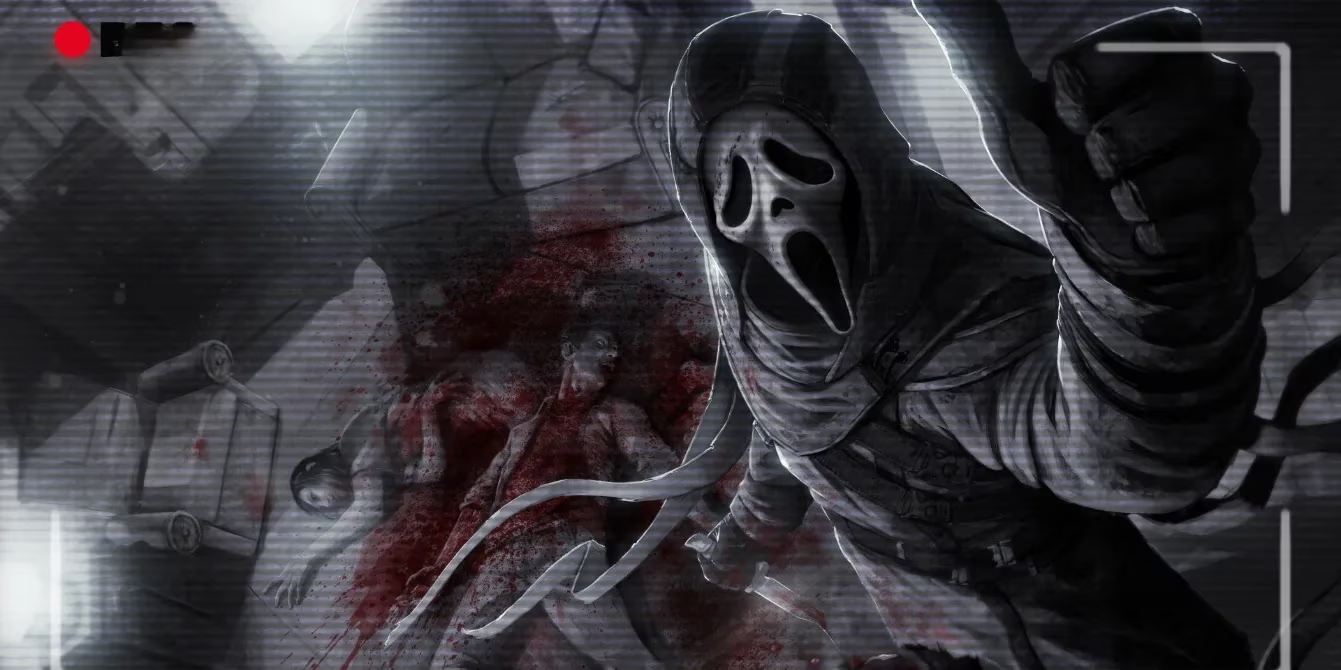
The Malevolence Tome offered a cavalcade of new masks for the stalking photographer, spectral garments to shroud his form. But one prize shimmered with a different kind of allure, a beacon of pure, unadulterated silliness in a realm of dread. The Wassup mask. Its inspiration is etched not in the grim annals of Scream, but in the parody-laden halls of Scary Movie. Who could forget the sequence? A phone call, a chorus of exaggerated "Wassup!" cries, and finally, the killer's own mask morphing into a cartoonish grin, tongue lolling out in absurd defiance. This image, a punchline at horror's expense, became iconic in its own right. For years, players whispered of its potential inclusion, a dream cosmetic that seemed forever out of reach. The game's aesthetic, after all, leaned heavily into dread; overt comedy was largely the domain of poor Dwight Fairfield and his unfortunate encounters with lockers. Could such blatant humor truly find a home here?
The arrival of the Wassup mask in 2026's Rift was not just an addition; it was a statement. It proved that the fog-shrouded trials could hold space for a chuckle amidst the chaos. Its inclusion felt like a gift to the community, a recognition of a shared joke that had persisted for years. It stood in delightful contrast to the game's other crossovers, like the grim biological terror of Resident Evil. This was something different, something personal. The mask's unlockable status through the Rift's challenges turned the grind into a pursuit of joy. Players diligently completed tome challenges, not just for Bloodpoints, but for the chance to finally let Ghostface stick his tongue out at his prey.
What does this mean for the future? The successful integration of the Wassup mask has irrevocably shifted the landscape. It whispers of possibilities once thought impossible. Could other licensed killers, those once considered untouchable, now receive similar playful or lore-expanding cosmetics? The barrier, it seems, is more permeable than anyone believed. Dead by Daylight has always been a horror game, but as demonstrated by both the Wassup mask and the surreal departure of the dating sim Hooked On You, it understands that the heart of a lasting community is built on more than just fear. It is built on shared experiences, inside jokes, and moments of unexpected brightness that make the surrounding darkness all the more potent.
By the time the current Rift sealed itself shut, a curious sight became common in the trials. Among the lurking shapes and spectral forms, a familiar silhouette would emerge from the fog, its face fixed in a permanent, ridiculous grin. The stalk was the same, the menace still present, but now punctuated by a silent, hilarious callback. In granting this long-held wish, the Malevolence Tome did more than distribute rewards; it affirmed that even in The Entity's realm, memory and mirth could, against all odds, wear a mask of their own. The players, having unlocked this piece of comedy, now carry a reminder: sometimes, the most memorable scare is the one that makes you smile before you scream.