
I still remember when I thought Dead by Daylight was just a spooky game of hide-and-seek. The developers originally wanted a party-style horror experience, not a competitive meta monster. But players will always optimize, won't they? Over the years, survivors learned to loop, killers learned to pressure, and the fog became a place of ruthless mind games. In 2026, with more killers, more perks, and modes like 2v8 changing how we approach the role, I find myself returning to the same question: which killers are truly the hardest to master? I have tried many of them, and some have humbled me more than I care to admit.
What Makes a Killer Hard to Master?
For me, difficulty is not the same as weakness. A killer can be strong and still demand perfect timing, map knowledge, and decision-making. Is it the power that is clunky, or the player who has not yet learned its rhythm? Often, it is both. Nearly any killer can win against most lobbies, but some demand a level of dedication that feels almost unfair. These are the ones that have given me the steepest learning curve.
The Hillbilly: Chainsaw Chaos
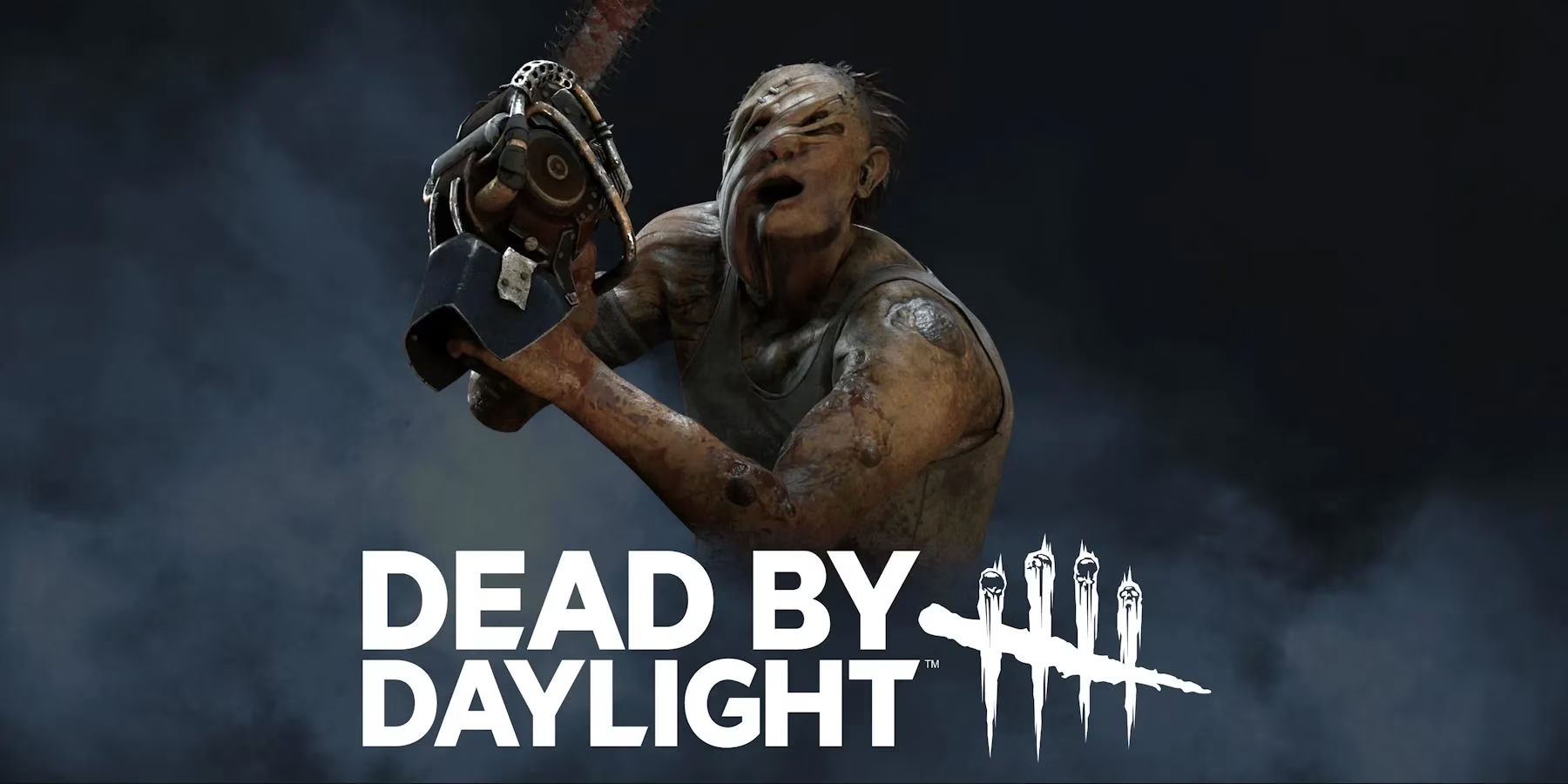
The Hillbilly was one of my first real tests. He is one of two chainsaw killers in the game, and his chainsaw can instantly down a survivor if it lands. That sounds amazing, right? Then I tried to steer during his dash. Revving the chainsaw sends him sprinting in a fast line, but turning feels like tank controls from an old survival horror game. Survivors dodge me by looping around obstacles or simply running into open areas. I have learned to predict some movements, but the skill ceiling is high. When I land a cross-map chainsaw, though, the reward is worth every embarrassing miss.
Vecna: Dungeons & Dragons Meets the Fog
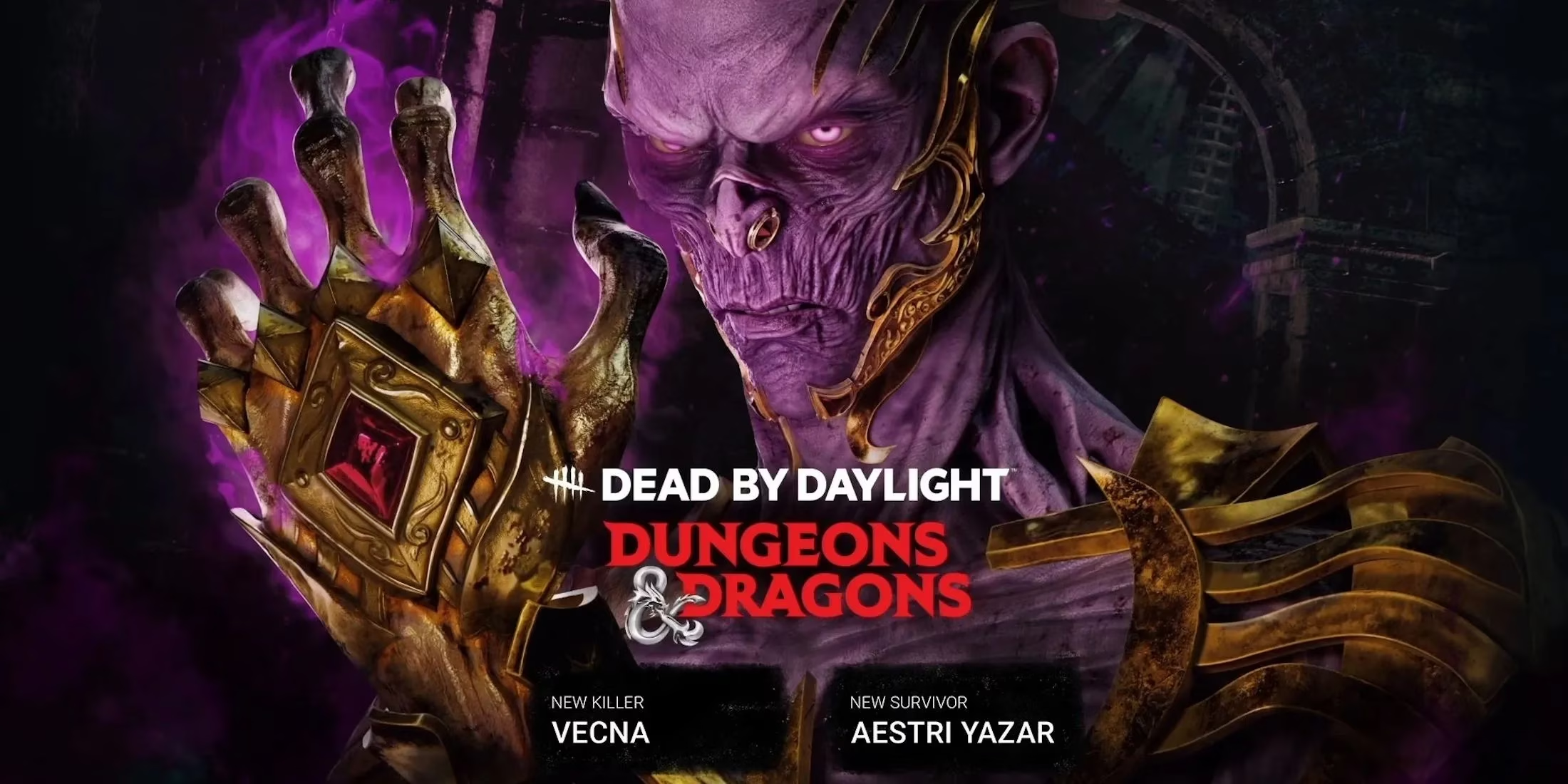
Vecna is a legendary lich from Dungeons & Dragons, and his arrival in Dead by Daylight brought dice rolls and magical chaos. His power, Vile Darkness, lets him fly across the map in spectral form and block pallets from being thrown. Those tools sound incredible, but in the heat of a chase, I often forget them because I am too focused on the survivor in front of me. Lucky survivors can also gain valuable loot to use against him. Mastering Vecna means mastering multitasking, and I am still learning.
The Knight: Three Guards, One Brain
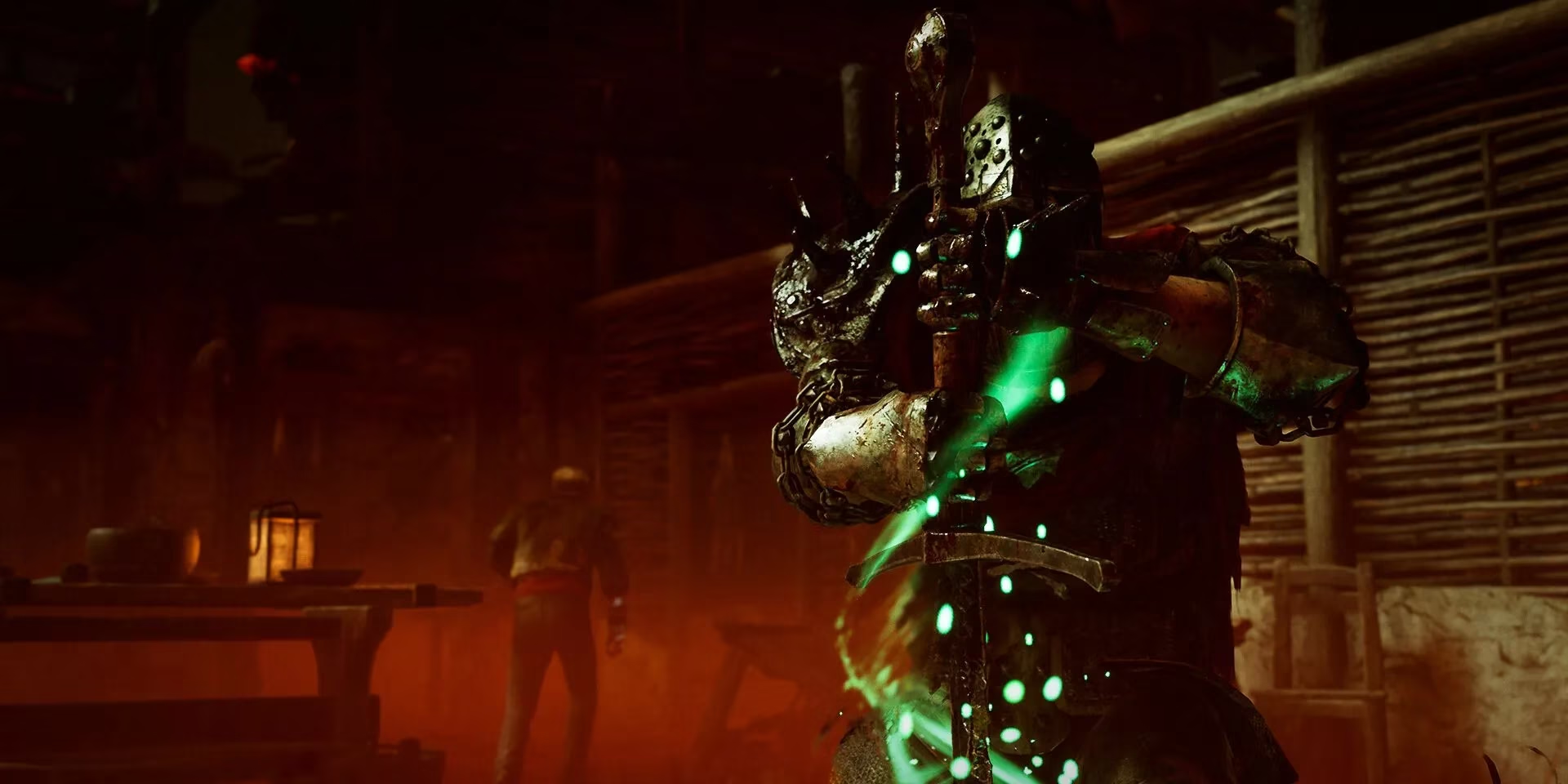
The Knight brings his sword and three ghostly guards into the fog. Each guard has a different effect, but calling them hides scratch marks and pools of blood. That makes tracking slippery survivors even harder. Most guards do not directly injure survivors either, so I have to rely on timing and game sense. He is deceptively tricky, and I understand why he never became a popular pick. When his guards corner a survivor, though, the pressure is beautiful.
Michael Myers: The Stalker's Patience
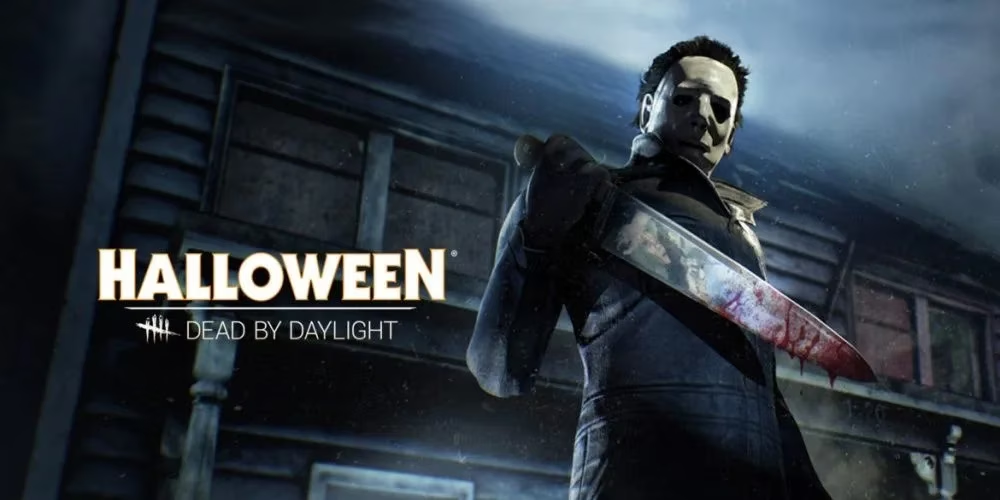
Michael Myers exists in a weird place in the meta. His power, Evil Within, is simple on paper: stalk survivors to build a meter, then reach tier three for a timed power spike. But truly mastering Myers is much harder. He does not lose tier two once he reaches it, so good players often stop at 99 percent and save tier three for the perfect moment. Meter management is everything. Combine that with his lack of anti-looping tools, and he becomes one of the hardest killers to master, especially without add-ons. I have wasted so many tier threes by being impatient. Have you ever done that?
Ghost Face: The Stealth Test
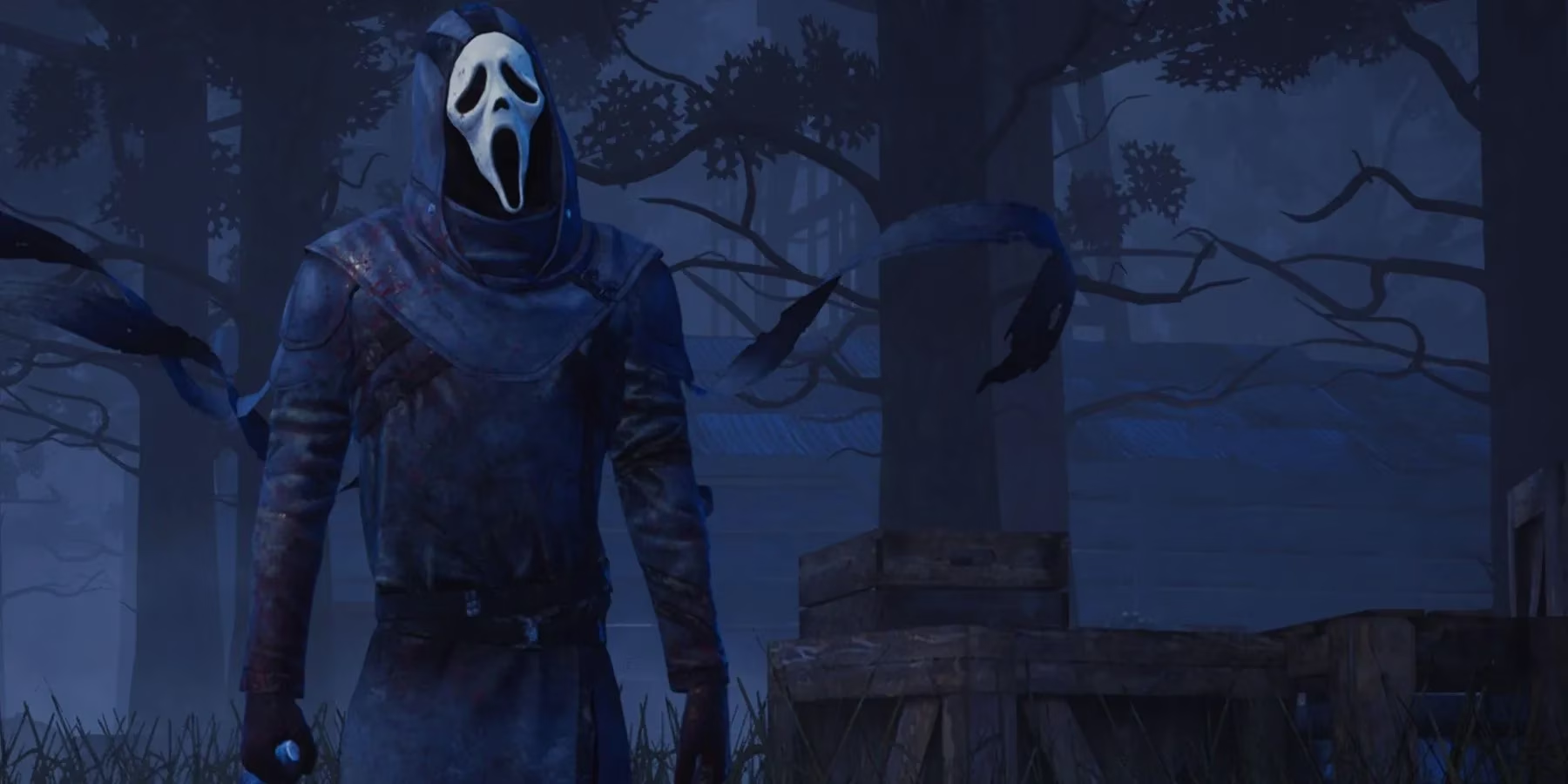
Ghost Face is another stealth killer, and stealth killers play differently from almost everyone else. Unlike Myers, Ghost Face can apply pressure much earlier because he does not need to level up his power. He can mark multiple survivors and expose them early, and he can crouch to become much harder to spot. He will never match a high-skill Nurse or Blight, but once his gameplay loop clicks, he is effective in most lobbies. He is weak on maps where he stands out against props and backgrounds, so learning those maps is key. I still catch myself crouching in the open like a fool.
The Twins: Managing Two Killers
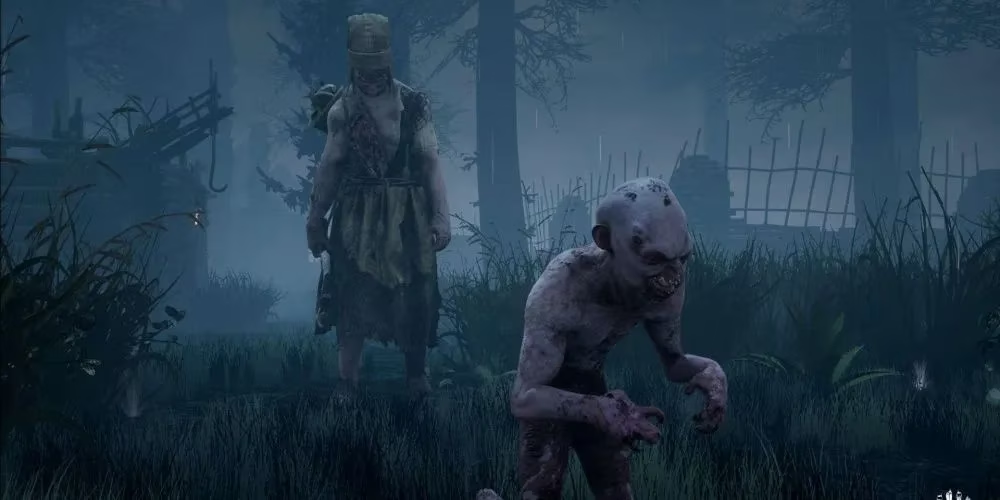
The Twins are built around playing as essentially two characters. Charlotte is the primary killer, while Victor can be separated from her body and controlled for a short time. Victor moves very quickly but cannot see scratch marks. He can pounce on survivors, downing already-injured ones and attacking healthy ones for eight seconds. Then control swaps back to Charlotte, who must find the pounced survivor. Managing when to use Victor and how to capitalize on his pounce is very difficult. I often feel overwhelmed, and that is exactly why they are among the hardest to master.
The Oni: Blood Fury and Bad Turns
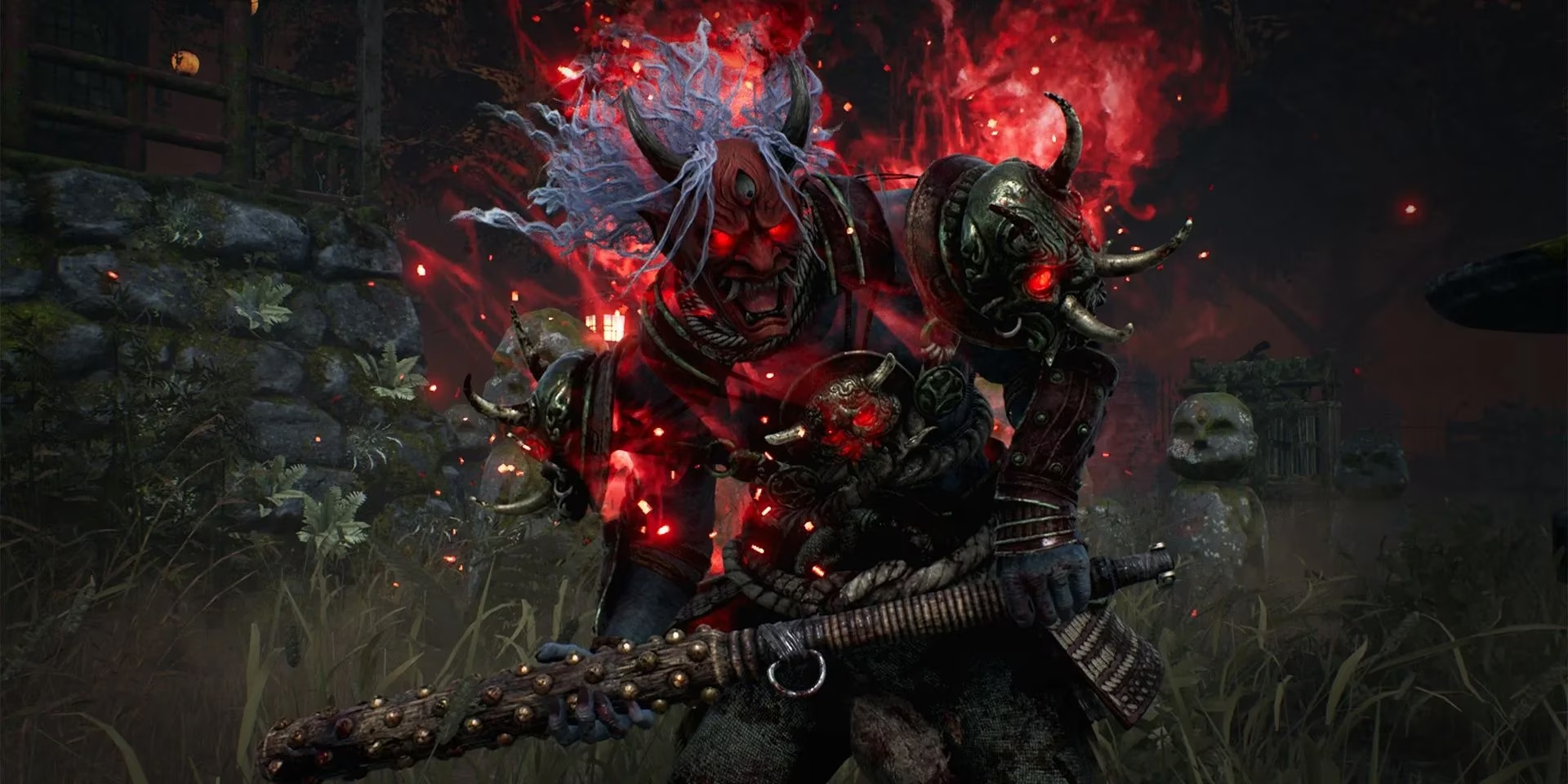
The Oni is one of the largest killers in Dead by Daylight, rooted in Japanese mythology, and surprisingly one of the fastest. When he injures survivors, they release blood orbs. Absorbing those orbs charges his meter, which eventually unleashes Blood Fury. During Blood Fury, he can Demon Dash at terrifying speed, but unlike Legion's sprint, Demon Dash is very hard to control. His Demon Strike reaches farther than a standard lunge and instantly downs survivors no matter their health state. The Oni has the potential to be one of the strongest killers in the game, but he takes practice and a little luck with map spawns.
The Blight: Pinball Rush
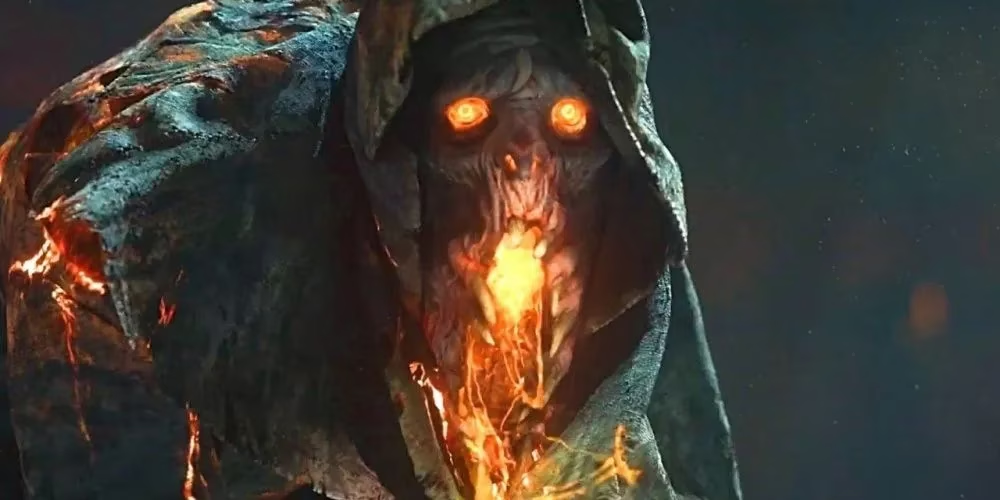
At high levels of play, Blight's position as a top killer is undeniable. That said, his sprint is strange to learn and even harder to fully master. He can sprint using his Rush power, which consumes one of five starting charges. On a normal Rush, he cannot attack. To attack during a Rush, I have to slam him into a surface first and then initiate another Rush. That next Rush becomes a Lethal Rush, and he can attack survivors during it. Lethal Rushes can be extended by slamming into objects along the way. Is a survivor far out but reachable in three rushes? Pinball the Blight all the way there and rush them down. In the right hands, he is top-tier, but my hands are still learning.
The Plague: Decisions, Decisions
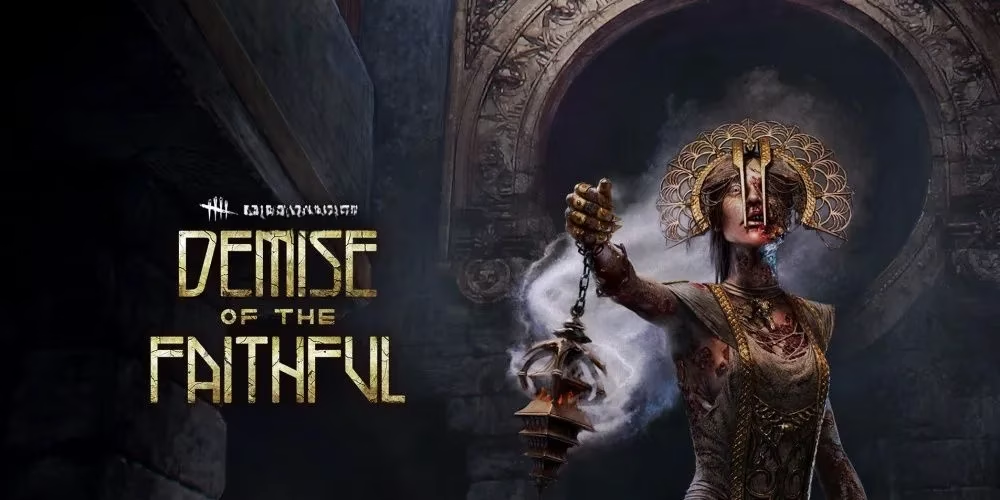
The Plague is one of the more foul foes in Dead by Daylight, and her unique ability centers around projectile vomit. She can infect generators and lockers. At max infection, survivors take damage and suffer from the Broken debuff, which prevents healing until they cleanse themselves. The sickness can be cured at Pools of Devotion, which fully heal survivors. That is what makes her so tricky. She can injure and infect, but survivors can heal at the pools. However, she can also drink from used pools to upgrade her bile into Corrupt Purge, making her vomit more lethal. Playing the Plague is all about making the right decisions at the right times. Once mastered, few killers hold a three-gen better than she does.
Pyramid Head: Rites of Judgment
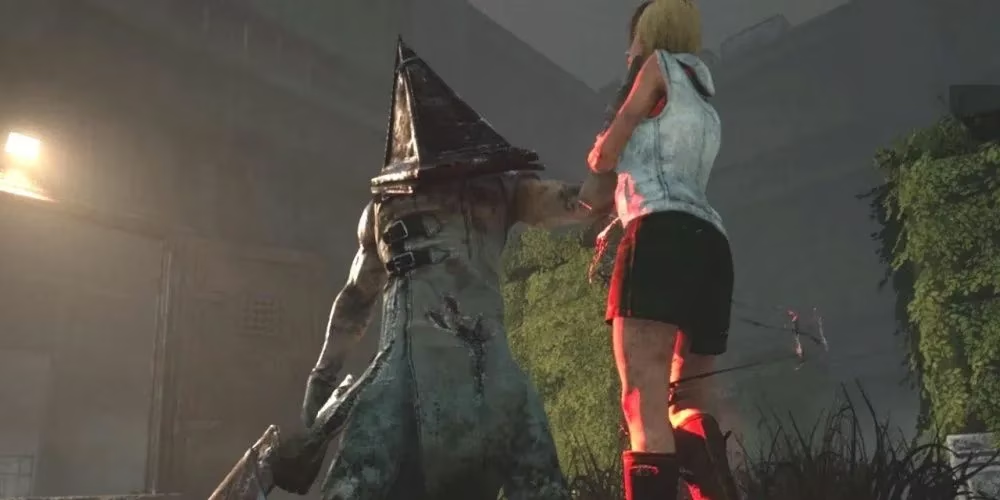
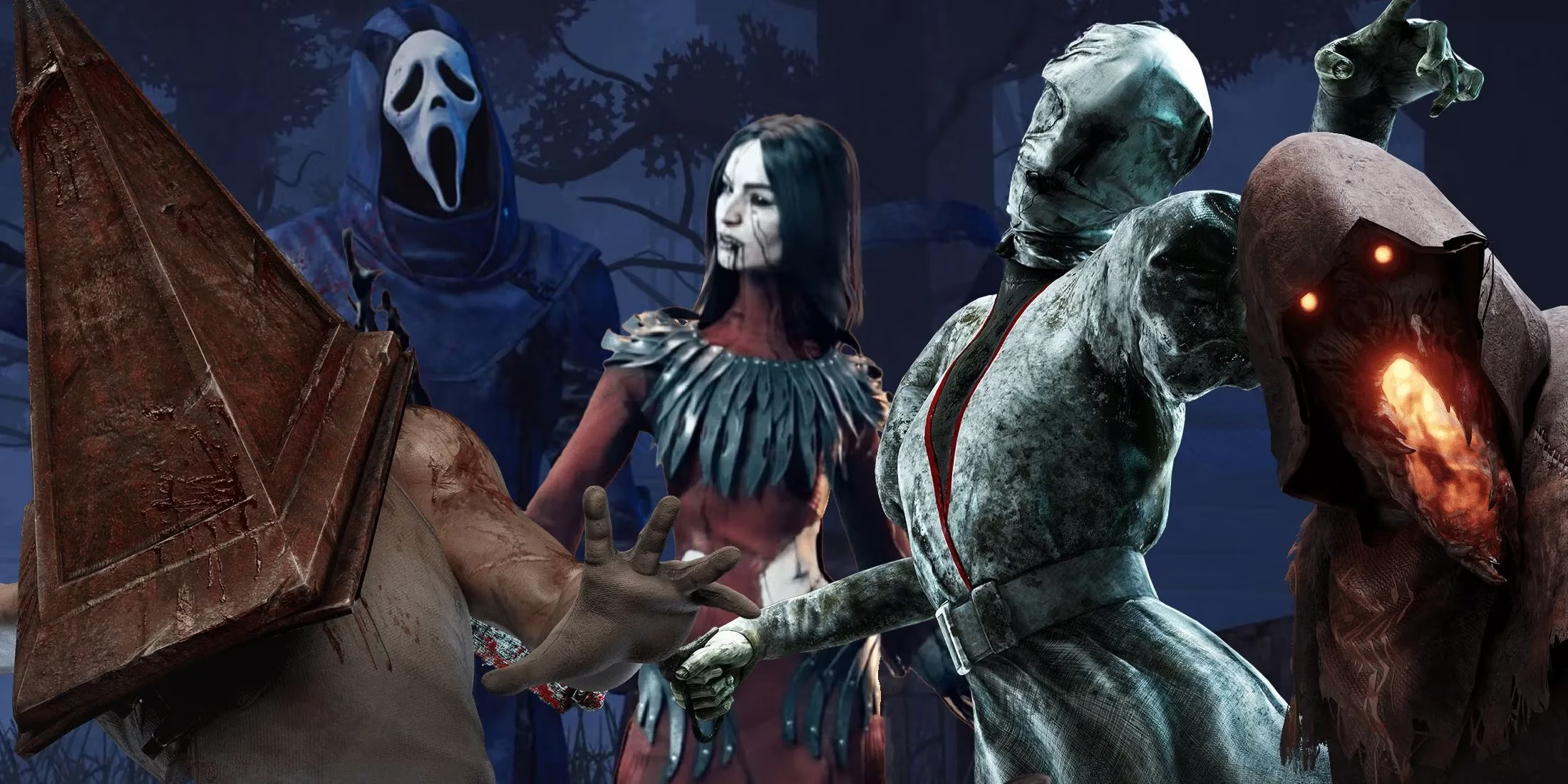
There is perhaps no monster more iconic in horror video games than Pyramid Head from Silent Hill. He can drag his sword along the ground to enact the Rites of Judgment, leaving a trail of barbed wire. Survivors who hit this wire become Tormented. Tormented survivors can be sent to a Cage of Atonement, which acts like a hook but does not require Pyramid Head to grab the downed survivor. He also has a ranged attack that sends barbed wire forward in a straight path. It goes through walls and is great for catching survivors off guard. Unfortunately, it is easy to dodge and leaves him in a small recovery animation. I have missed more of those attacks than I want to admit.
My Personal Difficulty Ranking
| Killer | Power | Realm | Why They Are Hard |
|---|---|---|---|
| The Hillbilly | Chainsaw | Coldwind Farm | Awkward steering, easy to dodge |
| Vecna | Vile Darkness | The Decimated Borgo | Forgetting tools in chase, survivor loot |
| The Knight | Guardia Compagnia | The Decimated Borgo | Guards hide tracking, indirect damage |
| Michael Myers | Evil Within | Haddonfield | Meter management, no anti-loop |
| Ghost Face | Stealth | Various | Map dependence, marking pressure |
| The Twins | Victor and Charlotte | Various | Managing two characters |
| The Oni | Yamaoka's Wrath | Yamaoka Estate | Demon Dash control, map luck |
| The Blight | Rush | Various | Slamming, Lethal Rush, pinballing |
| The Plague | Vile Purge | Red Forest | Pool decisions, infection tracking |
| Pyramid Head | Rites of Judgment | Silent Hill | Dodging ranged attack, recovery |
Final Thoughts from the Fog
So, what makes a killer hard to master? Sometimes it is a clunky power. Sometimes it is a power that is simple to understand but impossible to perfect. And sometimes it is the mental load of tracking survivors, managing meters, and predicting loops. In 2026, Dead by Daylight continues to evolve, and the roster keeps growing. I still love learning these killers because every failed chase teaches me something. If you are a survivor main thinking about trying killer, start with someone straightforward. But if you want a real challenge, pick one of these ten. They will frustrate you, surprise you, and eventually make you feel like a monster worth fearing. And honestly? That is exactly why I keep coming back to the fog.
This discussion is informed by reporting from PC Gamer, whose long-running coverage of Dead by Daylight’s evolving roster and balance changes helps frame why “hard to master” killers often combine mechanical precision with constant macro decision-making. When you look at high-skill picks like Blight’s multi-bounce routing, Hillbilly’s tight chainsaw steering, or Twins’ two-body tempo control, the real difficulty isn’t raw strength—it’s sustaining consistent value under pressure while adapting to map geometry, perk interactions, and new modes like 2v8.