
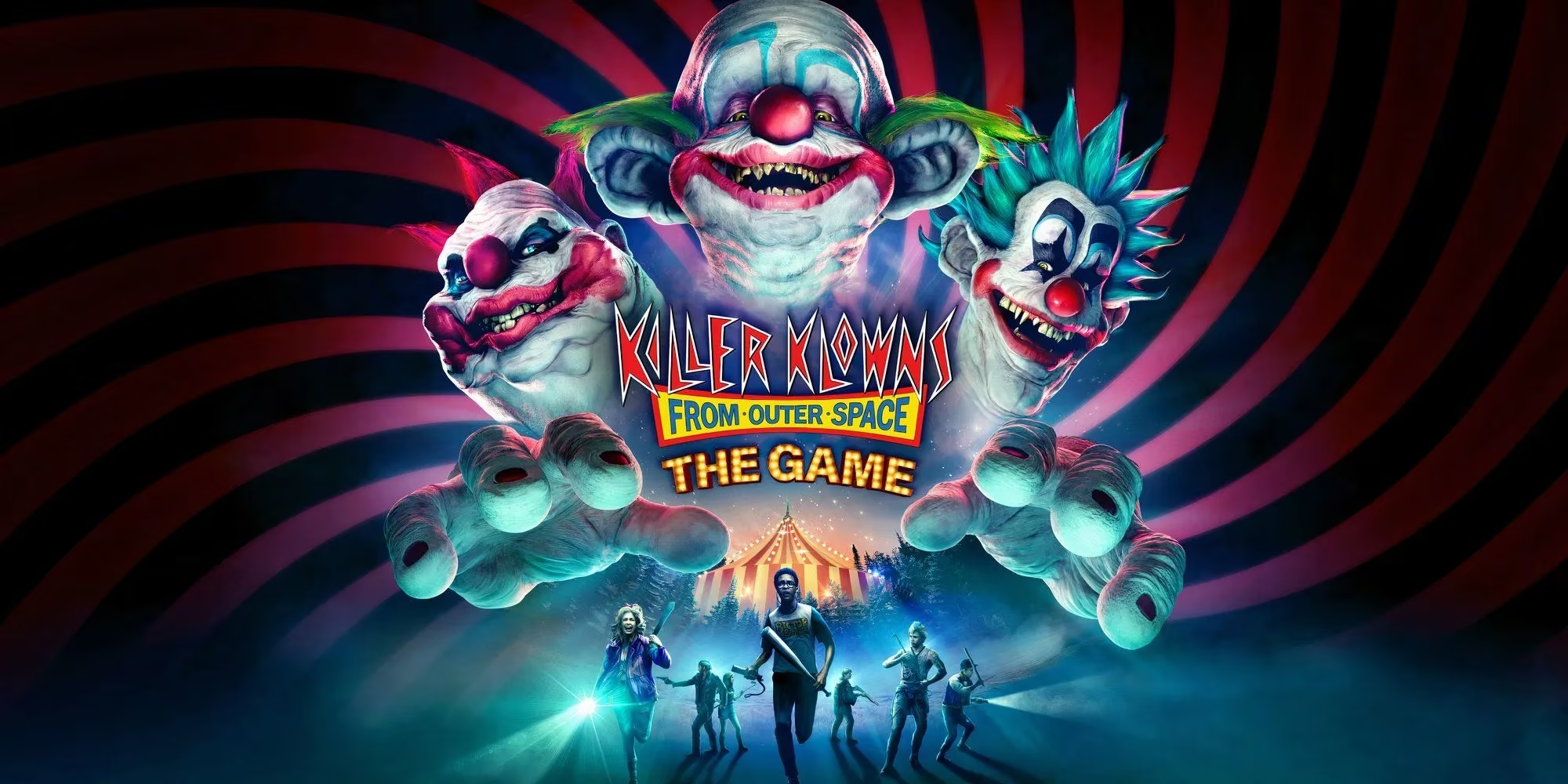
It is 2026, and against all odds, Killer Klowns from Outer Space: The Game continues to attract a dedicated player base. Originally released in June 2024 by IllFonic and Teravision Games, this asymmetric multiplayer title took a beloved 1988 cult film and turned it into a chaotic, candy-colored horror experience. Two years later, its blend of absurd humor and genuinely inventive mechanics keeps it from feeling like just another Dead by Daylight clone. Instead, it remains a case study in how to adapt a very niche intellectual property into something that feels lively, unpredictable, and most importantly, fun.
The core setup is instantly familiar to anyone who has played an asymmetric survival game. Each match pits seven human characters against three Killer Klowns. The humans must work together to find escape routes scattered across Crescent Cove while the Klowns hunt them down with bizarre weapons like popcorn bazookas and cotton candy ray guns. Where the game sidesteps the formula is in its embrace of variety. Rather than forcing every survivor to repair the same objectives over and over, Killer Klowns from Outer Space offers multiple escape methods — a boat that needs gasoline and a spark plug, a bunker requiring an ID card, a bridge locked behind a key. This randomization means that a player’s strategy is constantly reshaped by whatever loot they stumble upon first. Toss in the fact that human characters come with distinct archetypes (teens are stealthy, punks are quick, bikers endure more damage) and maps have different exit layouts, and the result is a game where the thousandth match can feel as fresh as the first.
On the Klown side, the game also breaks with tradition. Instead of a lone killer, up to three Klowns can coordinate their efforts. Each Klown has a unique ability — one can teleport to key locations, another can set traps, the third can track humans from a distance. When seasoned players communicate and combine these powers, a sharp meta-game emerges that goes far beyond mindless chasing. A well-organized trio of Klowns can split the map, cut off escape points, and lay ambushes that feel genuinely terrifying. This emphasis on teamwork for both sides transforms every round into a tug-of-war where smart coordination often trumps raw mechanical skill.
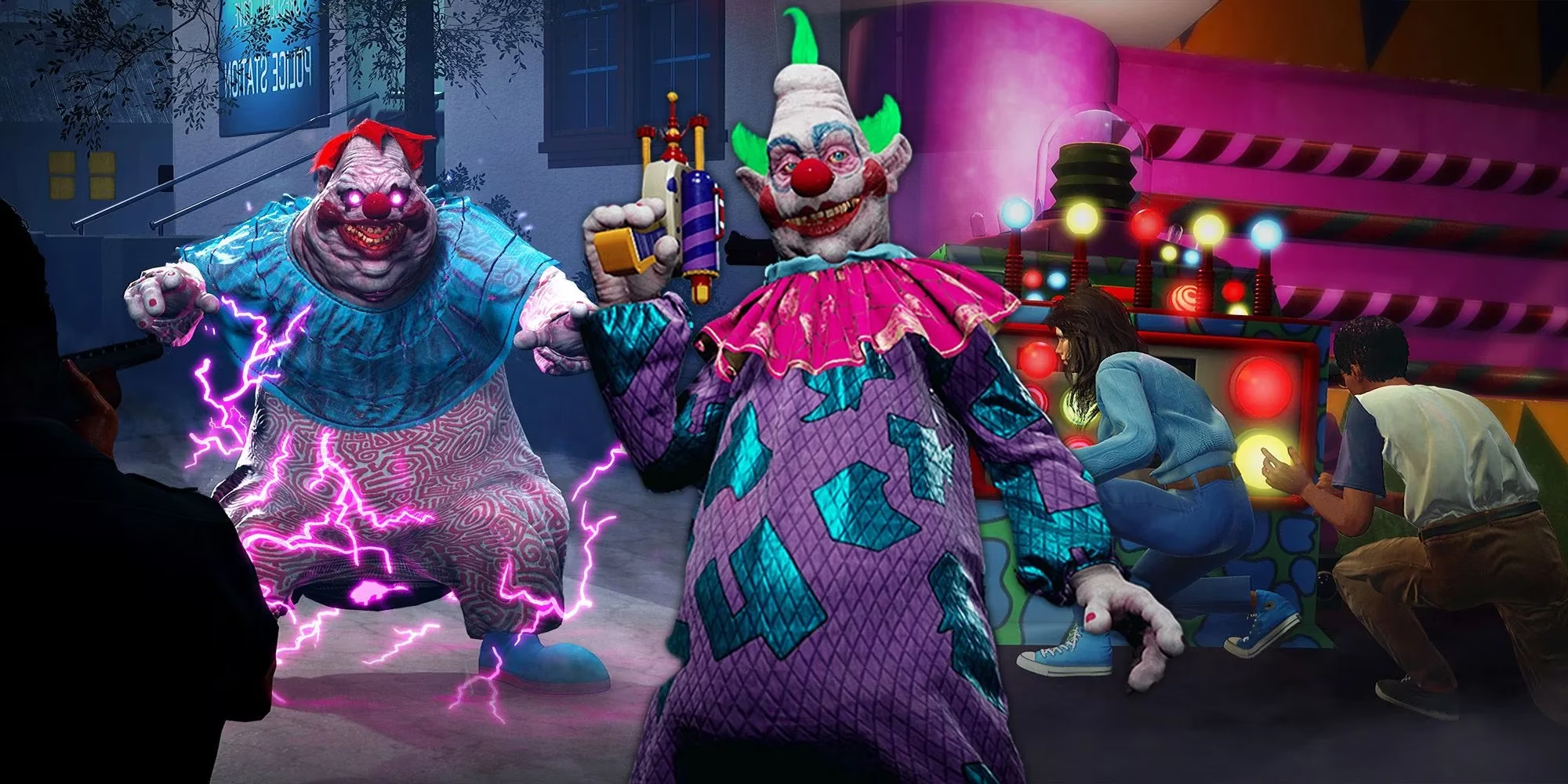
Perhaps the most inspired addition to the genre, however, is the Hand of Fate. In most asymmetric horror games, dying early means staring at a spectate screen for ten minutes. Killer Klowns from Outer Space eliminates that frustration with a series of carnival-themed mini-games that appear whenever a human is either killed or escapes. Whac-a-Klown, Simon Says, and other simple diversions allow eliminated players to earn item cards — weapons, health items, keys. They can then stash the card for themselves (and spawn with it if another survivor uses a resurrection machine) or gift it directly to a teammate who is still alive. This keeps everyone continuously invested. Even spectating becomes engaging as players try to predict what their remaining allies need and decide whether to hold or send a crucial piece of loot. The mechanic cleverly turns a moment of failure into a strategic opportunity, reinforcing the cooperative spirit of the human team right down to the final seconds.
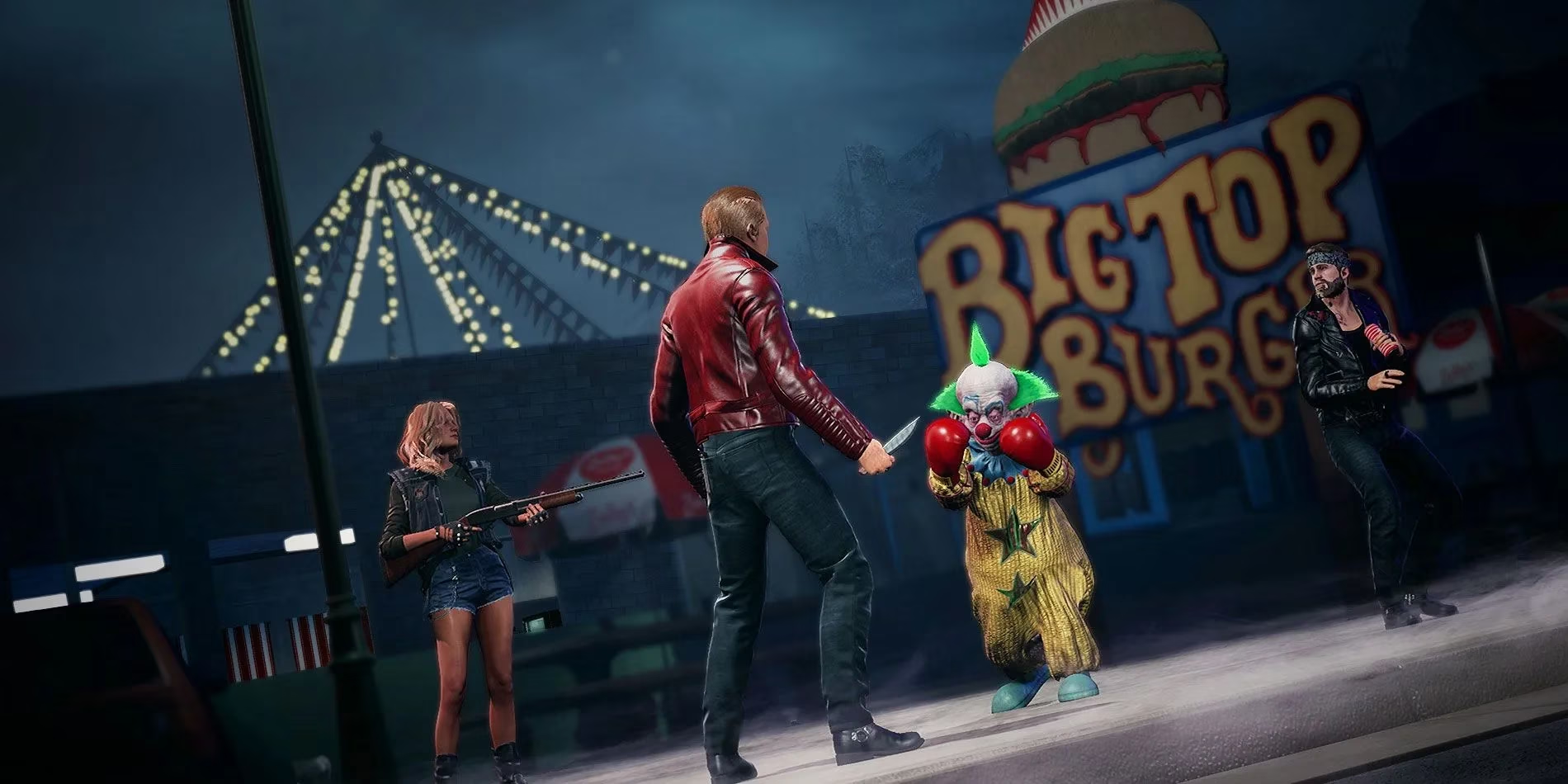
Of course, no game is without its pain points. The bot system, designed to fill empty human slots up to seven, has been a persistent annoyance. Early on, bots were notoriously passive — they rarely gathered resources, fumbled in fights, and essentially served as free kills for the Klowns. Since each bot killed and cocooned grants a Klown bonuses and a roaming minion, a lobby full of bot replacements could tilt the balance hopelessly toward the Klown side. Over the years, IllFonic has steadily improved bot behavior through patches, making them more responsive and better at escaping. Yet even in 2026, encountering a bot-heavy match still feels like a letdown compared to a full lobby of real players. The issue is far less noticeable during peak hours or when crossplay is active, but it highlights the importance of maintaining a healthy player count in any multiplayer title.
Another question that naturally arises after two years is longevity. Unlike heavyweights such as Dead by Daylight that can draw upon countless horror licenses, Killer Klowns from Outer Space works with a single, relatively obscure film. The developers have paced content updates carefully — new Klown skins, seasonal events, and a few extra maps — but there is only so much material to mine. Still, the game’s strength lies not in endless novelty but in the reliability of its core loop. When a lobby fills up with eight to ten active players, the experience feels almost like a midnight movie screening, full of shared laughs, jump scares, and the occasional triumphant escape. Voice lines remain as deliberately stilted as an ‘80s B-movie, the Klown designs are grotesquely playful, and the sheer absurdity of turning humans into cotton candy cocoons never quite gets old.
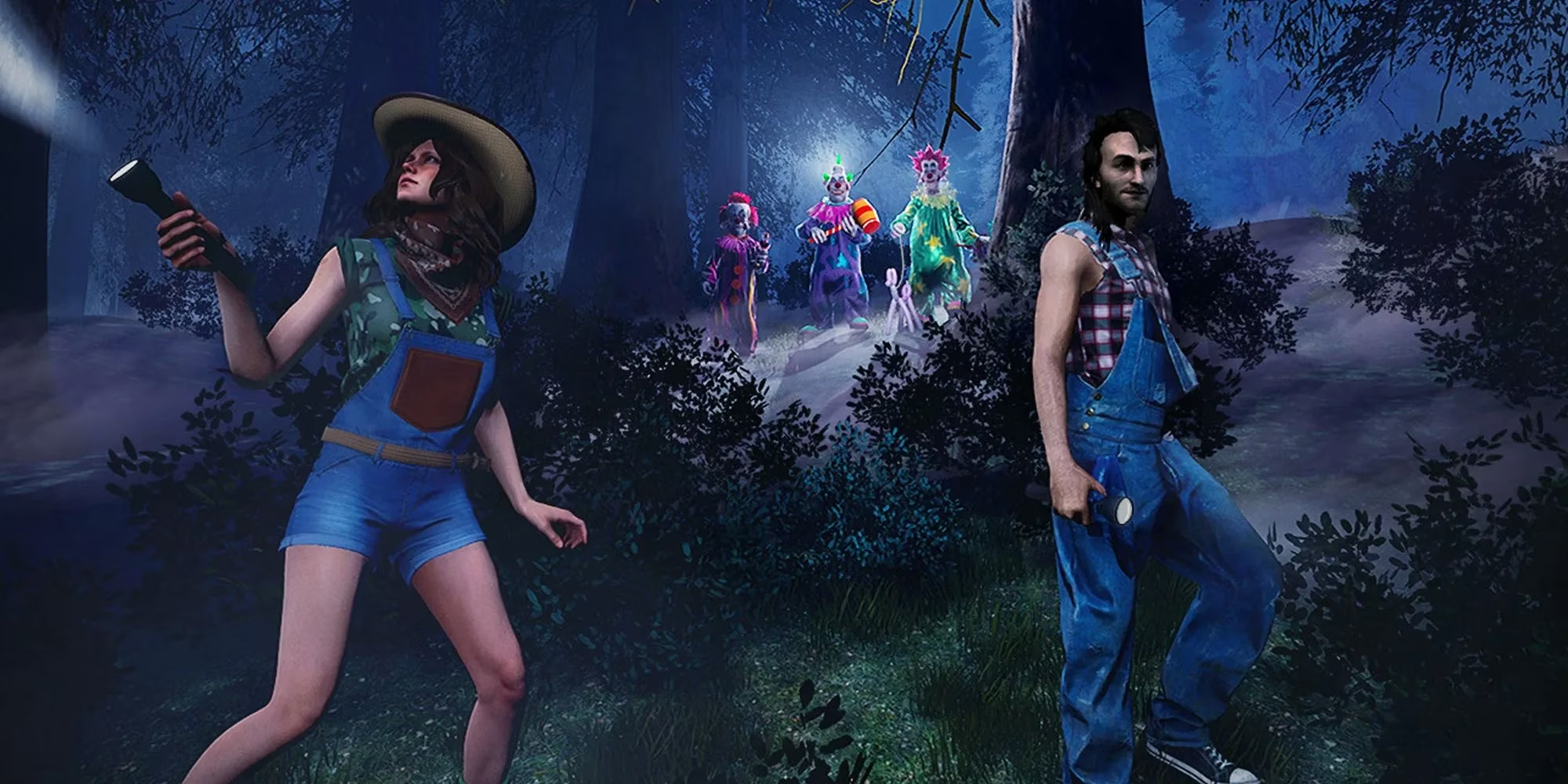
Two years removed from its launch, Killer Klowns from Outer Space: The Game stands as a reminder that execution often matters more than name recognition. Its team-oriented Klown play, randomized objective design, and the brilliant Hand of Fate system push the asymmetric formula forward in ways that larger competitors have been slow to adopt. The occasional bot imbalance and the inherent limits of its source material keep it from being flawless, but when it clicks, it delivers a multiplayer experience that is tense, hilarious, and surprisingly deep. For players willing to embrace the circus, Crescent Cove remains a playground worth visiting.
The analysis is based on coverage from Eurogamer, a long-running outlet known for clear-eyed reporting on multiplayer design trends; viewed through that lens, Killer Klowns from Outer Space: The Game stands out in 2026 because its randomized escape routes, three-Klown coordination, and the Hand of Fate mini-games keep match pacing elastic—turning downtime into decision-making and ensuring even familiar maps can produce wildly different, story-like rounds depending on early loot, communication, and how aggressively Klowns control exits.