
Beneath the deceptive surface of Dead by Daylight lies a labyrinthine web of mechanics so intricate, they could make a Swiss watch look like a child's toy. What began as a digital game of hide-and-seek has, by 2026, morphed into a psychological and strategic battleground where every heartbeat echoes with consequence. Newcomers who dare enter the Entity's realm expecting a casual stroll are swiftly disabused of that notion, finding themselves instead in a high-stakes chess match where one misstep can spell doom for an entire trial. The fog is no longer just an aesthetic; it's a living, breathing arena of calculated terror and desperate survival.

The Survivor's Symphony: Coordination is Key
For the lone Survivor navigating the nightmare, the Kindred perk is not just helpful—it is the lifeline that transforms four individuals into a single, cohesive organism. This universally available perk illuminates the auras of both allies and the Killer when a teammate is hooked, orchestrating rescue efforts with the precision of a conductor leading a symphony. It eliminates the chaotic guesswork, ensuring the closest Survivor moves for the unhook while others capitalize on the Killer's distraction, turning a moment of vulnerability into a strategic opportunity.
Spawning Strategy: Don't Huddle!
Upon materializing in a map, the instinct to cluster on the nearest generator is as common as it is catastrophic. The optimal strategy is to scatter like shrapnel from an explosion. The goal is to pressure multiple generators simultaneously, particularly central ones, forcing the Killer to patrol a sprawling battlefield rather than a single front. This also prevents the dreaded 'Three-Gen' scenario in the endgame, where the final generators are clustered together, handing the Killer a defensible fortress. Leaving peripheral generators untouched early on is a chess move that pays dividends in the final, desperate minutes.
The Exhaustion Arsenal: Your Get-Out-of-Jail-Free Cards
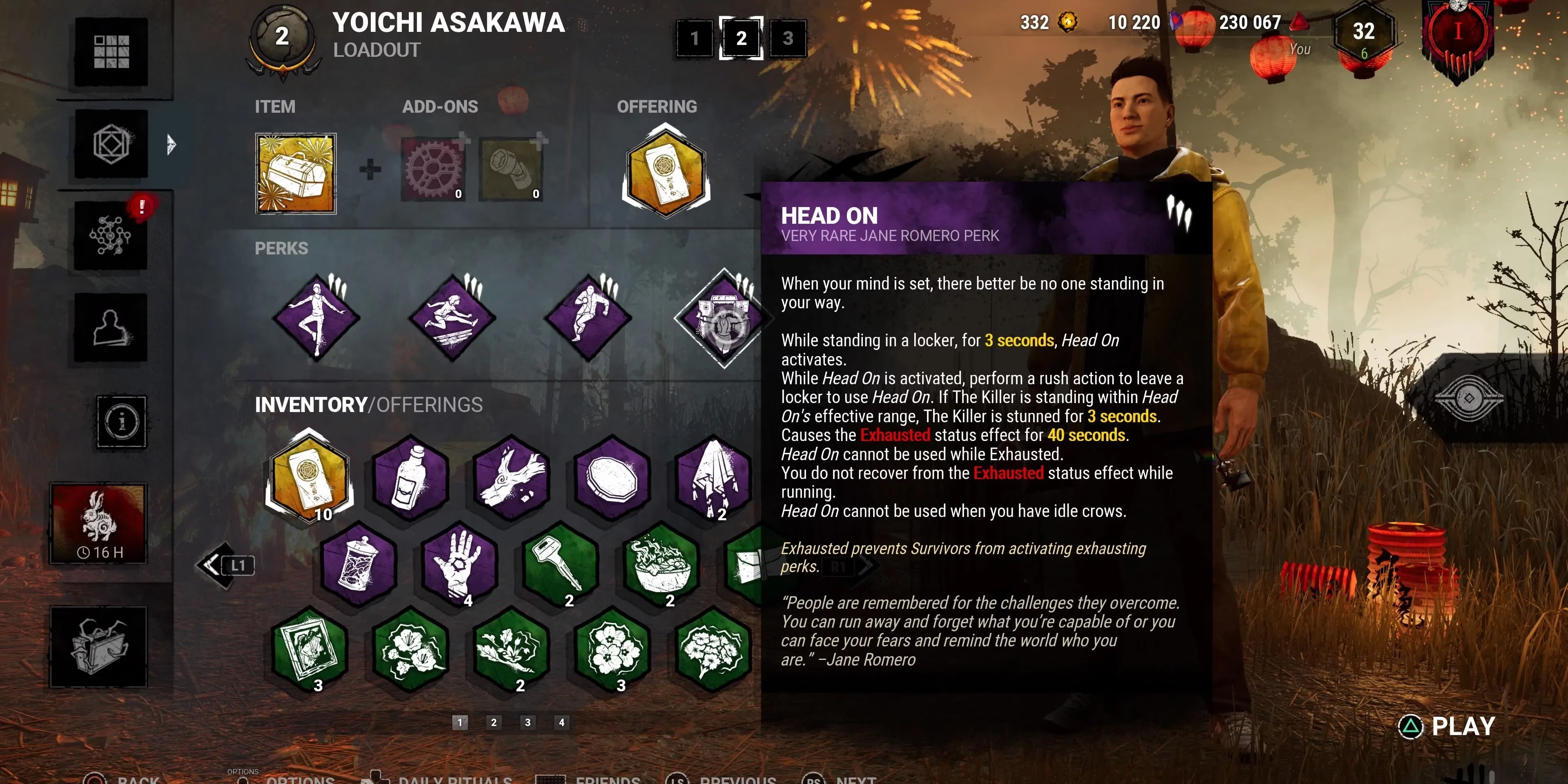
The eight Exhaustion Perks (Adrenaline, Smash Hit, Overcome, Lithe, Sprint Burst, Balanced Landing, Dead Hard, Head On) are the Survivor's emergency boosters. Think of them not as simple speed boosts, but as parachutes that deploy when you're in freefall during a chase. A competent Survivor build always includes one. For beginners, Jonah Vasquez's "Overcome" is the most forgiving, providing a burst of speed upon being hit, buying precious seconds to reach the next loop. Killers, however, must treat these perks with the respect one gives a hidden landmine. Tracking which Survivor has which Exhaustion perk—especially the dreaded Dead Hard—is paramount. The counterplay involves a maddening game of unpredictability, feinting attacks and varying timing to bait out the precious charge.
The Art of the Loop: Dance with the Devil
When the Killer's terror radius becomes your personal soundtrack, your destination is always the nearest loop. These structures, adorned with pallets or windows, are the Survivor's dance floors. To navigate them with the grace of a ballerina, Kate Denson's "Windows of Opportunity" acts like a tactical heads-up display, highlighting all vault points within 32 meters. If caught in the open, Survivors can employ Field of View (FOV) techs, exploiting the Killer's first-person perspective. The classic move is to orbit the Killer like a moon around a planet, forcing a missed swing and creating distance.
Pallets: A Precious, Non-Renewable Resource
This is a critical lesson: pallets are not tissues to be used and discarded. The most elite Survivors treat every pallet like the last bottle of water in a desert. They are a finite resource, and once broken, a loop becomes a death trap, creating a 'deadzone' for the late game. The golden rule? Only drop a pallet when the Killer's breath is on your neck and a hit is guaranteed. Before that, rely on windows, mind games, and raw skill to waste the Killer's time. Premature pallet drops are the hallmark of a panicked player and a gift to any competent Killer.
The Killer's Mind Games: Mastering the Red Stain
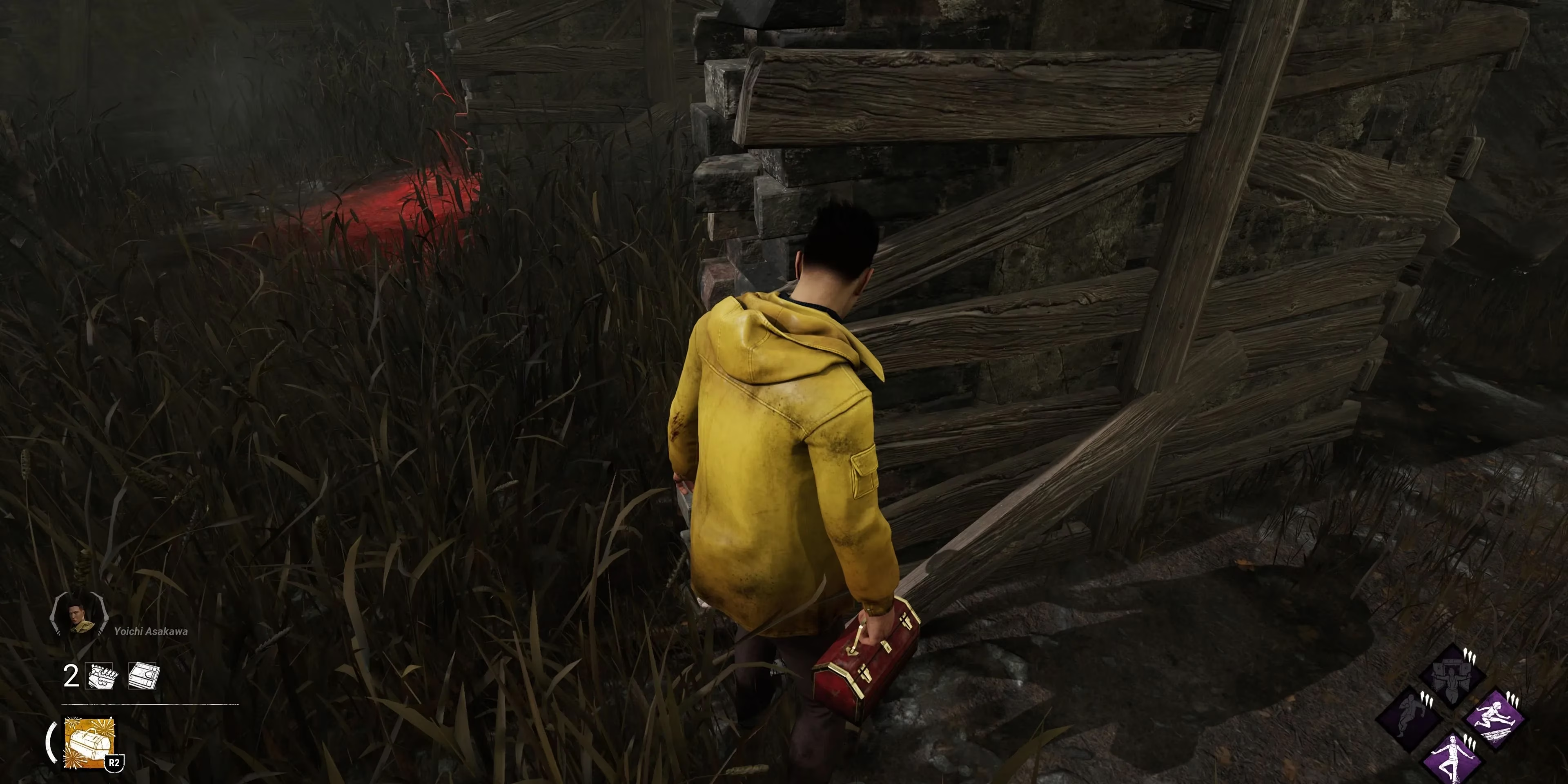
For the Killer, the chase is your domain, but the red stain—the glowing precursor to your vision cone—is your greatest tell. While Survivors use it to predict your path, you can weaponize it. By manipulating your camera, you can make the stain appear to travel one way while you move another, a simple yet devastating mind game. At high-level tiles like the Killer Shack, this technique can save minutes by tricking Survivors into wasting pallets or making fatal positioning errors. It turns your greatest weakness into a predatory feint.
Avoiding the Stun-Loop Nightmare
New Killers often find themselves trapped in a humiliating cycle of flashlight blinds and pallet saves. The counter is a blend of speed, awareness, and paranoia.
-
At Pallets: Scoop up downed Survivors with the haste of a hawk snatching its prey. Delay gives coordinated teams an opening.
-
The 180 Spin: Before any pickup, perform a quick spin or face a wall. This simple move disrupts the angles for flashlight saves.
-
Scout and Bait: If the area feels like a trap, use the downed Survivor as bait. Pretend to pick up, then punish the greedy rescuer who reveals themselves.
When all else fails, bring perks like Lightborn (immune to flashlights) or Franklin's Demise (makes Survivors drop items) to shut down item-dependent strategies completely.
Knowing When to Fold 'Em: The Sunk-Cost Fallacy
Perhaps the hardest lesson for a Killer to learn is when to abandon a chase. If a Survivor is looping you with the efficiency of a figure skater on fresh ice, and the chase exceeds 60 seconds, you are likely losing the game on other fronts. The time it takes to complete a generator is roughly 90 seconds. Chasing one Survivor for too long is like trying to bail out a sinking ship with a teaspoon while three other holes are being drilled into the hull. Break off. Apply pressure to generators. Find a weaker target. Letting one slippery Survivor go to disrupt three others is a trade that wins trials.
HUD Awareness: The Information War
For Survivors: Your HUD is a real-time tactical map. Use it. See a generator at 90%? Sprint to it for the clutch completion. See a teammate on death hook (twice hooked) in a chase? That's your cue to be a hero. Leave your generator, intercept the Killer, and take the chase yourself. Trading health states to keep all players in the game is a mathematically superior strategy.
For Killers: Your mental ledger should track hook states religiously. A Survivor on their second hook is a priority target—eliminating them quickly creates a permanent 3v1 advantage. However, avoid tunneling (focusing one Survivor out of the game). Spread hooks evenly to avoid triggering powerful anti-tunnel perks like Decisive Strike or Off the Record, and to maximize map-wide pressure.
The Healing Conundrum: To Mend or to Mend Generators?
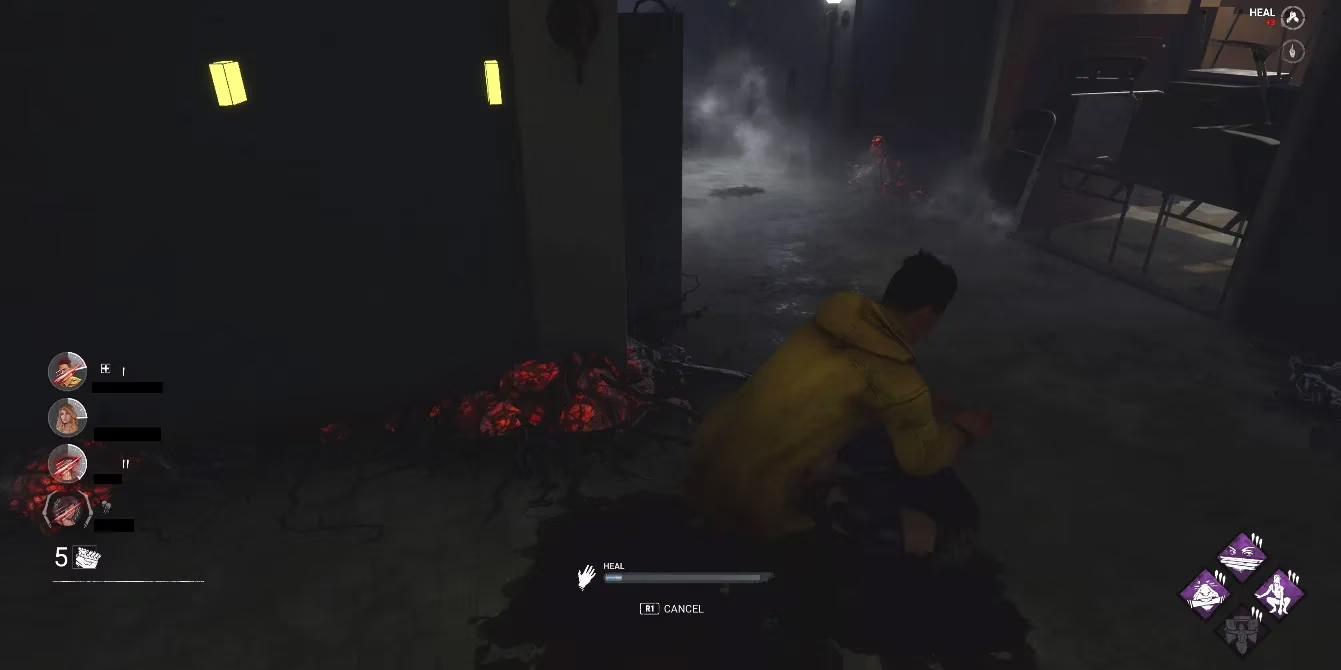
Healing in 2026's meta is a constant risk-reward calculation, more complex than defusing a bomb. If the Killer is running popular regression perks like Eruption or Pain Resonance, completing a generator while a teammate is in chase can trigger devastating setbacks. The decision tree is brutal:
-
Generator nearly done? Finish it, even if it means taking a hit later.
-
Generator far from completion and a teammate is being chased? Heal. A healthy team can afford mistakes.
-
A Survivor is on the hook? Unhooking is almost always the top priority. Spending 30 seconds self-healing in a corner while a teammate dies is a strategy as effective as using a paper umbrella in a hurricane. Perks like Self-Care can be a trap, consuming time better spent on objectives or coordinated saves.
In the end, mastery of Dead by Daylight is less about raw reflexes and more about strategic foresight, resource management, and psychological warfare. The Entity doesn't reward bravery; it rewards cunning. Whether you're outsmarting the Killer in a labyrinth of steel or methodically corralling Survivors toward their doom, victory belongs to those who see the trial not as a series of chases, but as a grand, bloody equation waiting to be solved.