
A decade had passed since the campfire first flickered in the Entity’s realm, and yet in 2026, Dead by Daylight remained a terrifying phenomenon that refused to lose its grip on the horror world. The fog was thicker than ever, swallowing survivors and killers from every corner of pop culture—but one question still crackled through generator-lit whispers like static in the night. Why had the Master of Horror himself, Stephen King, never truly crossed into the trials?
It was no secret that Behaviour Interactive’s creative director, David Richard, had dreamed aloud of such a union years earlier. Back in 2022, as the shimmering terror of Ringu’s Sadako glided into the game, Richard confessed to being a lifelong fan of the universe and the villains from King’s books. Those words had ignited a bonfire among the community, a hope that characters born from the pages of It, The Shining, Carrie, and Pet Sematary might one day be pursued by the bloodthirsty hooks. But creators often dream, and the gap between a wish spoken in an interview and a signed licensing deal can yawn wider than the Overlook’s corridors.
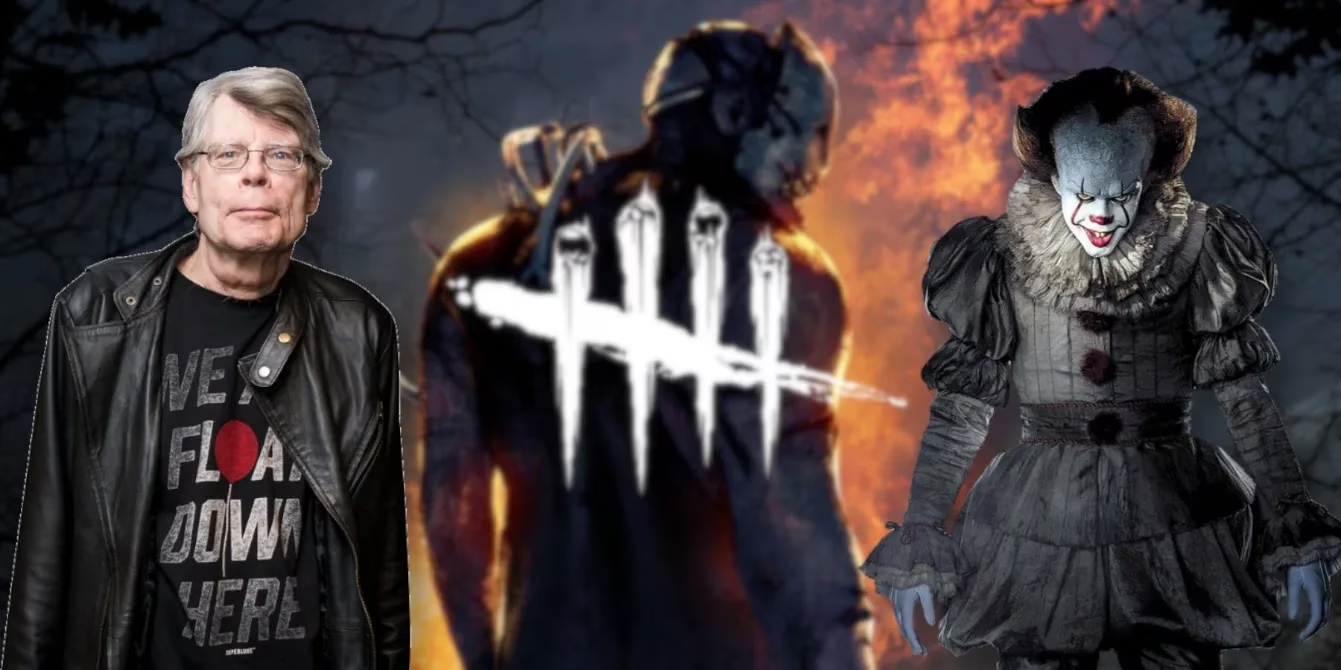
As 2026’s anniversary celebrations flooded the servers with legacy cosmetics and retrospective videos, a survivor crouched behind a mossy wall on the reworked Coldwind Farm, flashlight in hand, and let her imagination drift. What would it be like to hear the distant, rattling laughter of Pennywise echoing from the sewers beneath the carnival map? The killer could shape-shift, summon balloons that block pathways, and force survivors to confront their deepest fears in the form of illusions that bite. Would anyone survive a chase where the very ground opened into a starry void and a voice whispered, “They all float down here”? The idea sent shivers more potent than any perk.
But King’s literary nightmares weren’t the only what-ifs. Behaviour had spent ten years perfecting the art of the crossover. From the ripped-open torso of Pyramid Head to the angry tentacles of Nemesis, the roster had swelled with nightmares borrowed from movies, games, and even television. The Saw chapter, first teased back when Richard shared his King fantasy, had become a staple, with Jigsaw’s traps creating some of the most tense endgame scenarios. Yet still, no Jack Torrance swinging an axe through a snow-choked lodge, no Christine revving a murderous engine down the lanes of Haddonfield. Why? Licensing an author’s entire universe was a beast far different from negotiating a single film license. King’s works sprawled across multiple publishers and film studios, each with its own rights-holder clutching a set of legal keys. Did the Entity have the patience to collect them all?
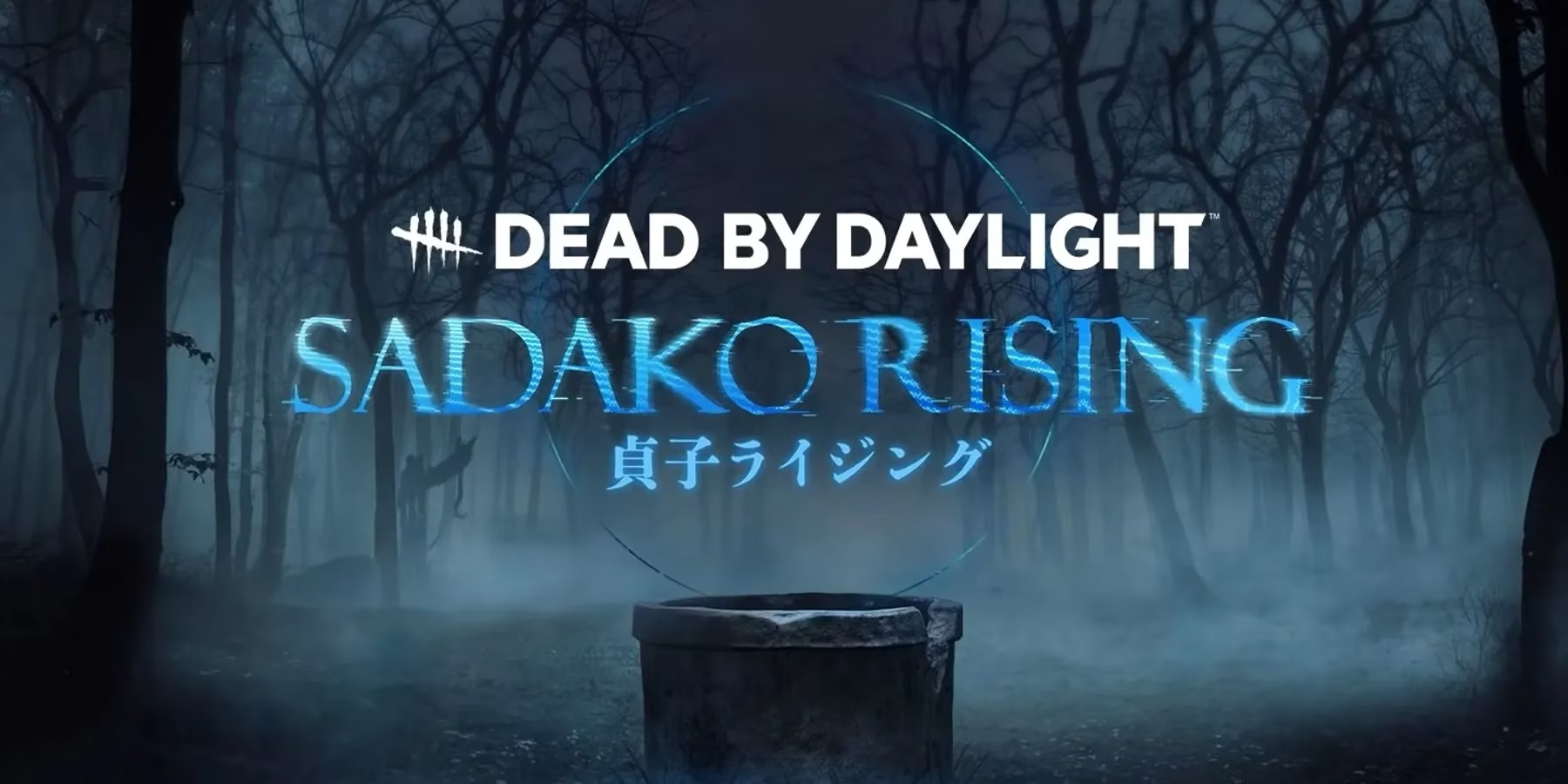
In 2026, a rumor surfaced—stoked by a cryptic tweet from the official DBD account that featured a flickering typewriter and a single red balloon emoji. The community dissected it as eagerly as a forensic team. Was this the year the fog swallowed Derry? Were we about to see a chapter titled “The Shining of the Fog” or “Carrie’s Rage”? Streamers speculated wildly, their chat logs overflowing with flaming heart emojis and crying faces. Yet weeks later, the developers unveiled a chapter inspired by a much newer indie horror title, brilliantly executed but far from the iconic terror many had prayed for.
The truth was that ten years of live service had taught the player base to be patient. Dead by Daylight had evolved from a scrappy hide-and-seek game into a sprawling horror museum, where every new addition felt like a carefully curated exhibit. Richard’s original dream, shared so earnestly, still lingered as a north star for the design team. In internal interviews, he continued to mention that the “universe and the villains” of Stephen King offered infinite potential, not just for killers but for survivors like Danny Torrance with his shine, or even the ragtag Losers’ Club as legendary outfits. Could a player someday heal under the pale glow of a psychic aura while the Overlook’s ghostly twins block doorways? Exploration of King’s themes—shared psychic trauma, corrupted innocence, the horror lurking in small towns—would fit seamlessly into the game’s lore.
The question wasn’t if King’s menagerie belonged in the fog, but when the stars of licensing would finally align. As 2026 marched toward its Halloween season, data miners uncovered placeholder text referencing something called “Project Turtle”—an internal codename that immediately made fans of It grin because the turtle Maturin was a cosmic force against Pennywise. Coincidence, or the Entity finally cracking a door to another dimension? David Richard, when asked at a dev panel, only smiled and replied, “Good horror is always patient.”
So the survivors kept repairing generators, the killers kept hooking, and somewhere in the endless fog, an ancient, spider-like creature woven from nightmare logic likely savored the anticipation. The dream of a Stephen King crossover had survived six full years since those first public comments, and it had not faded—it had matured. Would 2027 be the year the world heard the roar of a 1958 Plymouth Fury or felt White Rose petals drift across a hellscape prom? Only the fog knew for sure. Until then, the typewriter kept tapping, and every player, flashlight flickering in the dark, was left to wonder what shape the next chapter would take.