
As I sit here in 2026, reflecting on the landscape of horror gaming, a profound sense of melancholy washes over me. The genre I once loved for its intimate, soul-shaking dread has been largely consumed by a relentless trend: the multiplayer horror experience. Games like Dead by Daylight pioneered this path, promising terror shared among friends, but in doing so, they have systematically dismantled the very foundations of fear. The shared laughter, the coordinated strategies, the comforting presence of another voice in the dark—these are the ingredients that have cooked the goosebump-raising horror of old into a bland, communal stew. What was meant to amplify terror has, instead, become its most effective anesthetic.
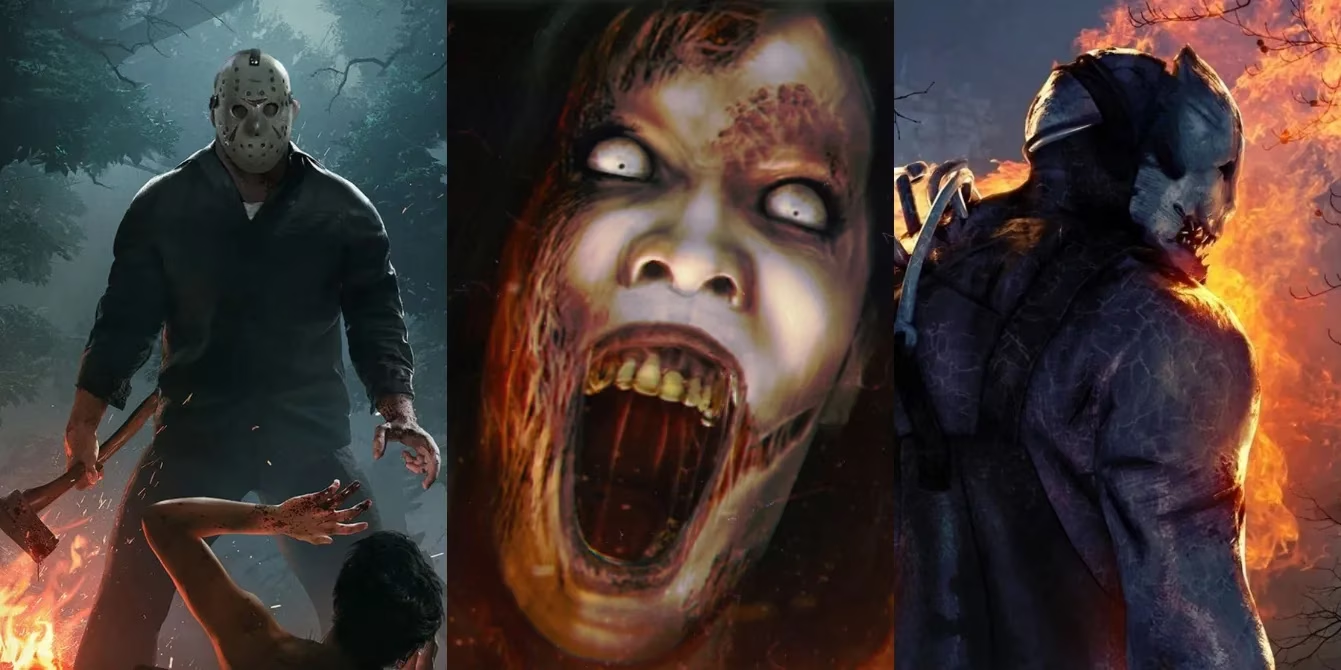
The core sin of these games is their foundational premise: safety in numbers. True horror, the kind that lingers in your bones long after you've turned off the screen, is born from profound isolation. It's the chilling understanding that you, and you alone, are prey in an uncaring, hostile world. I remember the suffocating silence of Song of Horror, where every creak of a floorboard was a personal message from the void, and the clinical dread of The Mortuary Assistant, where the jump scares felt like violations because there was no one to share the shock with. These experiences were personal, unshareable nightmares. In contrast, the modern multiplayer template offers two flawed blueprints:
-
The Asymmetric Hunt: One player becomes the monster (Dead by Daylight), while the others scramble to complete tasks. The dynamic shifts from fear to sport.
-
The Cooperative Squad: Players band together against AI horrors (Phasmophobia, DEVOUR), turning a survival ordeal into a checklist of objectives.
In both cases, the terrifying unknown becomes a known variable to be managed. Communication channels, meant for coordination, become conduits for jokes and meta-commentary, shattering any fragile atmosphere the developers tried to build. The monster, once an omnipotent force of nature, is reduced to a predictable opponent with a hitbox and a cooldown timer.
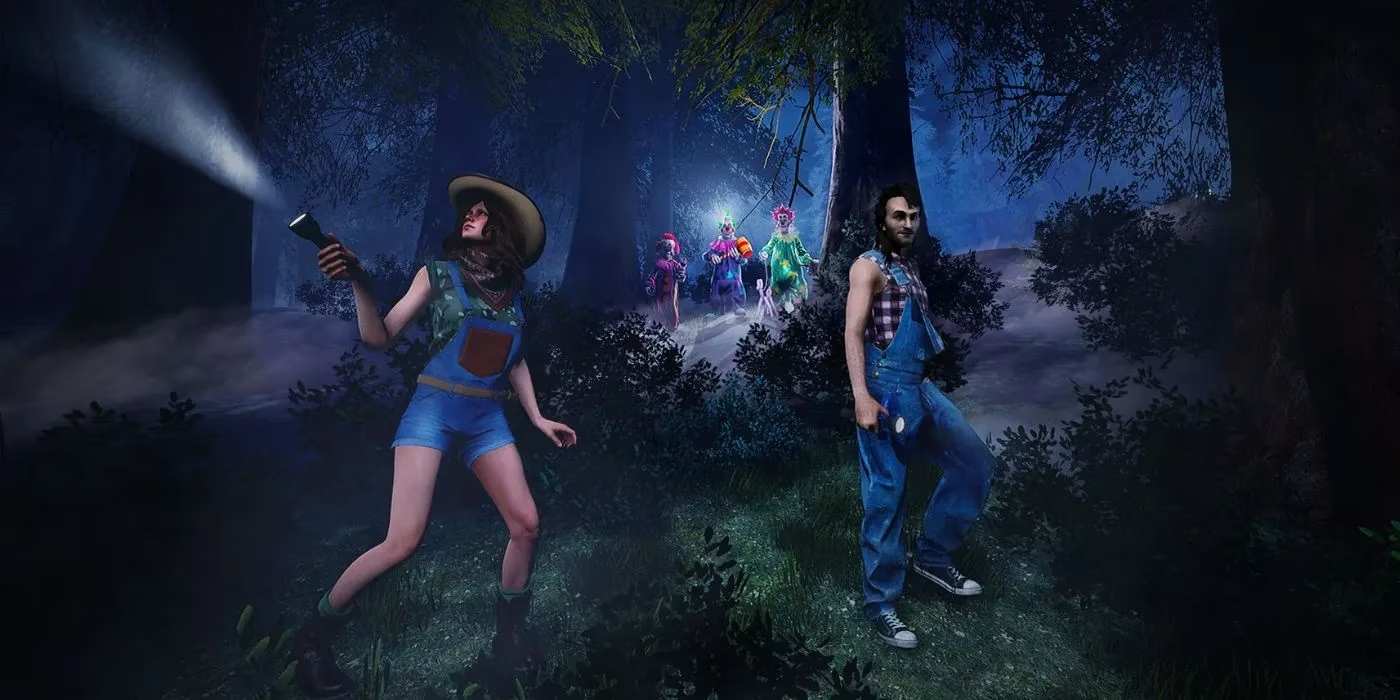
The result is a tragic cycle of repetition and diminishing returns. 🎭 The industry keeps churning out titles with nearly identical mechanics, where novelty is the only currency of fear. A new villain in Dead by Daylight might startle us for a week, but once the community "solves" its patterns, the terror evaporates, leaving behind a competitive game skin wrapped in a horror aesthetic. The defining features—teamwork, communication, shared objectives—are inherently at odds with the psychological needs of horror: vulnerability, uncertainty, and solitude.
We have traded the profound, personal scream for a shared, nervous giggle. The genre now faces a critical juncture. To reclaim its soul, it must look beyond the crowded, chat-filled rooms and remember the power of the empty hallway, the unshared whisper, and the terrifying truth that sometimes, the most frightening thing is to be utterly, completely alone.
| Single-Player Horror | Multiplayer Horror |
|---|---|
| Atmosphere of profound isolation | Atmosphere of communal activity |
| Personal, immersive dread | Shared, often comedic tension |
| Unpredictable, unknowable threats | Predictable, manageable opponents |
| Mechanics built on vulnerability | Mechanics built on cooperation & efficiency |
The path forward isn't to abandon multiplayer entirely, but to radically rethink its relationship with fear. Perhaps it's time for experiences that use connectivity not to comfort, but to betray—to isolate players within a connected world, where communication is unreliable or even weaponized against them. The template is broken. The scream has faded into a murmur. In 2026, we must dare to be silent again, to listen to the old, lonely terrors, and build something new from that quiet, desperate place.