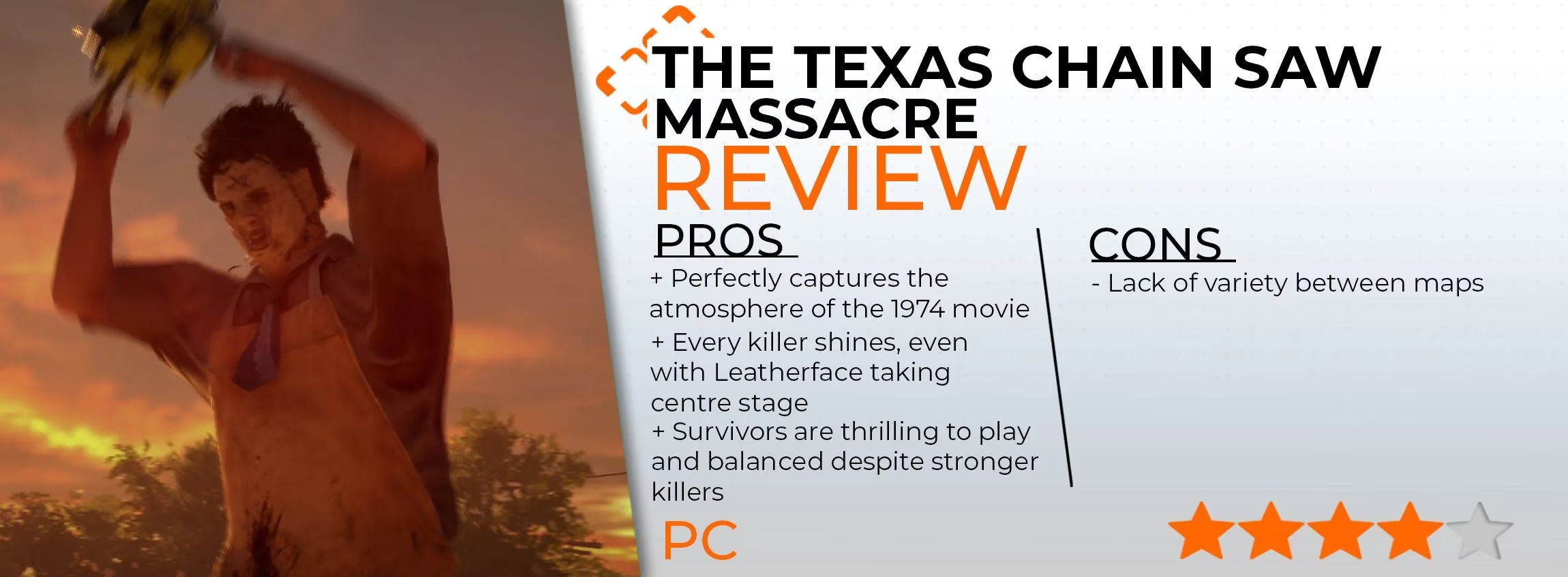
You know that moment when you’re crouched in a filthy basement, your heart pounding so hard you’re sure it’ll give you away, and somewhere overhead a chainsaw roars like an angry metal beast? That’s Tuesday for me. Even three years after launch, The Texas Chain Saw Massacre hasn’t lost its edge. It’s 2026, and I’m still crawling through those grimy Texas farmhouses, holding my breath, praying that Leatherface doesn’t turn around. And honestly? It’s still one of the most nerve-shredding experiences you can have with a controller in your hands.
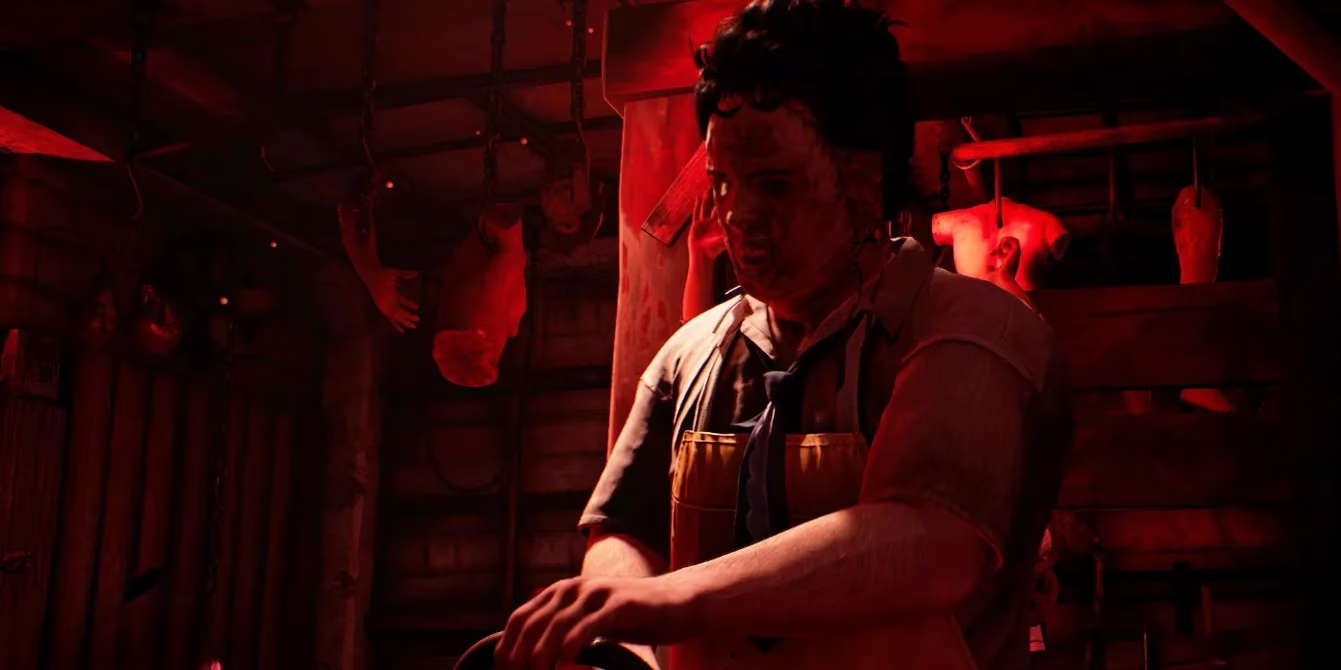
Here’s the thing about asymmetric horror games: usually, everyone wants to be the killer. The queues are stacked, the survivors feel like cannon fodder, and you spend half your time waiting in lobbies. But TCM flipped that script back in ‘23, and it still feels fresh today. Surviving in this game isn’t just about holding M1 on a generator; it’s a tense, almost voyeuristic game of cat and mouse where one wrong move means you’re sausage meat. The family doesn’t need to hook you three times—a couple of slashes from a knife or one good chainsaw thrust, and you’re done. And if that wasn’t enough, there are three killers prowling the map simultaneously, plus Grandpa sitting in his chair, screeching out your location if he gets a taste of blood. What do you do when everyone and their grandma (literally) wants you dead? You shut up and hide.
Sumo Digital and Gun Interactive didn’t just crib Dead by Daylight’s homework; they tore up the rulebook and built something that makes stealth matter again. In my years of playing, I’ve learned that the best way to survive isn’t to loop the killer around a pallet—it’s to vanish. Grass, shadows, tiny crawl spaces—these are your best friends. I’ve spent entire matches just watching Leatherface stomp past me, his saw drowning out my frantic heartbeat. It’s the closest I’ve ever felt to being in a horror movie, and in 2026, with all the graphical updates and new content the team has dropped, those moments hit even harder.
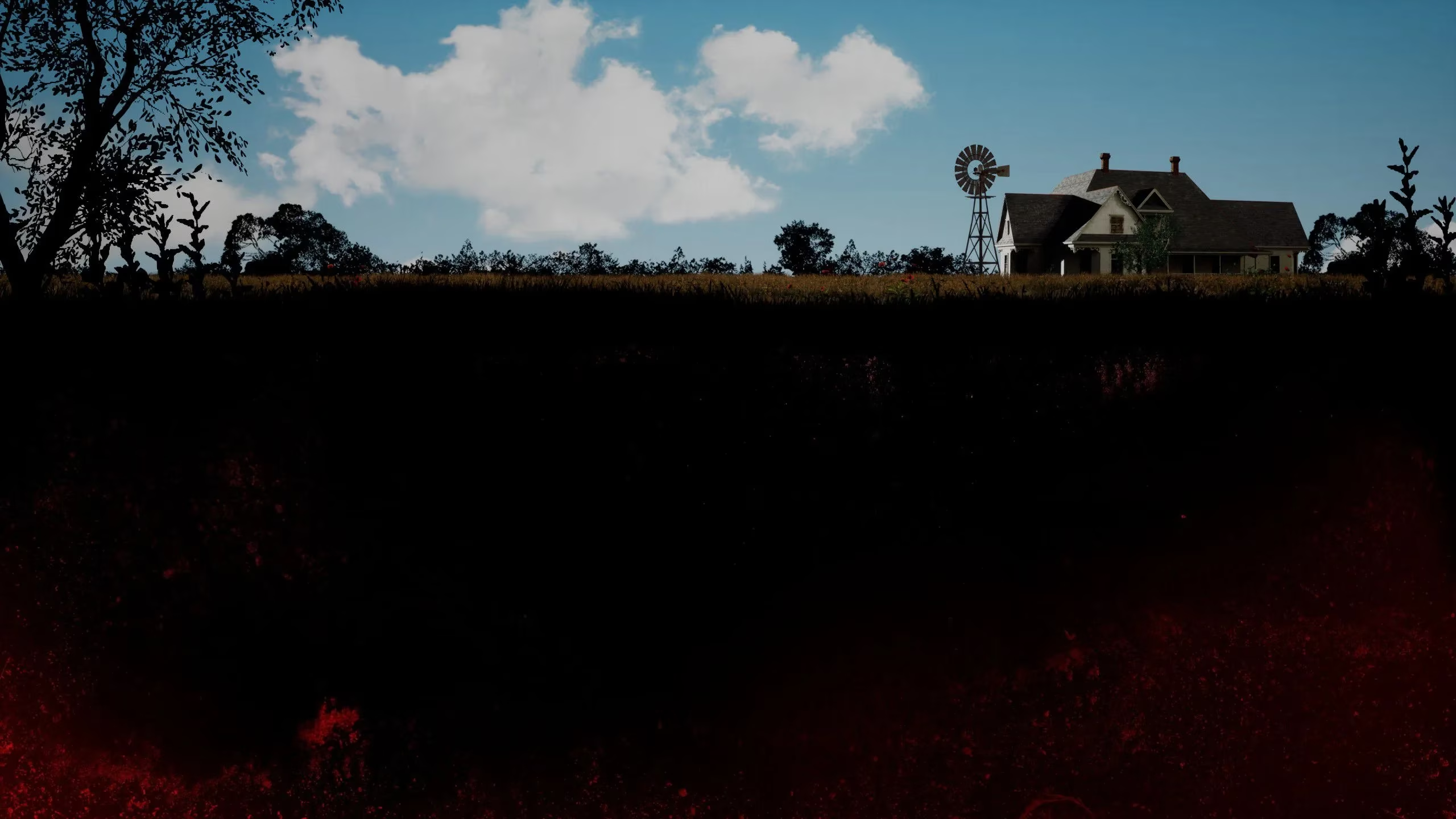
Now, let’s talk objectives. They’re deceptively simple: find a fuse for a basement door, pick a lock on a gate, or fiddle with a pressure valve. The challenge is doing it without getting caught. Timing is everything. Do you make a break for that exit now, or wait until the Hitchhiker wanders off to check a different area? I can’t count how many times I’ve had my hands on a lockpick, only to hear footsteps and have to dive into a closet. That adrenaline rush when you finally crank open the last door? Unmatched. And here’s the kicker—you’re not helpless. You can shove a family member to the ground, squeeze through a crack in the wall, or backstab them with a bone shard. But those moments are fleeting, and they usually push you back to square one. It’s a dance, and the killers are always leading.
But wait—teamwork! In most games, sticking together is the golden rule, right? Not here. In my experience, grouping up only summons all three killers like sharks to chum. The best strategy is to split the family’s attention. Spread out, work on different exits, and let the lone wolf shine. And you know what? That’s incredibly liberating. If I mess up and get my face rearranged by Sissy’s knives, my team isn’t sunk. There are multiple ways out, and anyone can snag a victory by themselves. This design choice has kept the toxicity surprisingly low over the years—fewer angry messages, fewer people screaming about meta perks, just pure, sweaty-palmed horror. In 2026, I can’t stress enough how refreshing it is to play a game where you’re allowed to be scared without someone yelling at you for not optimizing your stealth route.
Of course, playing as the killer is still a blast. Leatherface is mandatory in every match—that chainsaw is a constant hum in the background, a reminder that the big guy is always near. But what I love is that the rest of the family got just as much attention. The Hitchhiker with his traps, Sissy with her toxic gas and poisoned health flasks, Johnny with his tracking—they all bring something distinct. Personally, I gravitate toward Sissy; she can chase survivors through narrow gaps that Leatherface can’t even dream of squeezing through. Imagine being a victim, finally losing sight of one killer, only to round a corner and find a petite woman with a straight razor smiling at you. That’s the stuff nightmares are made of.
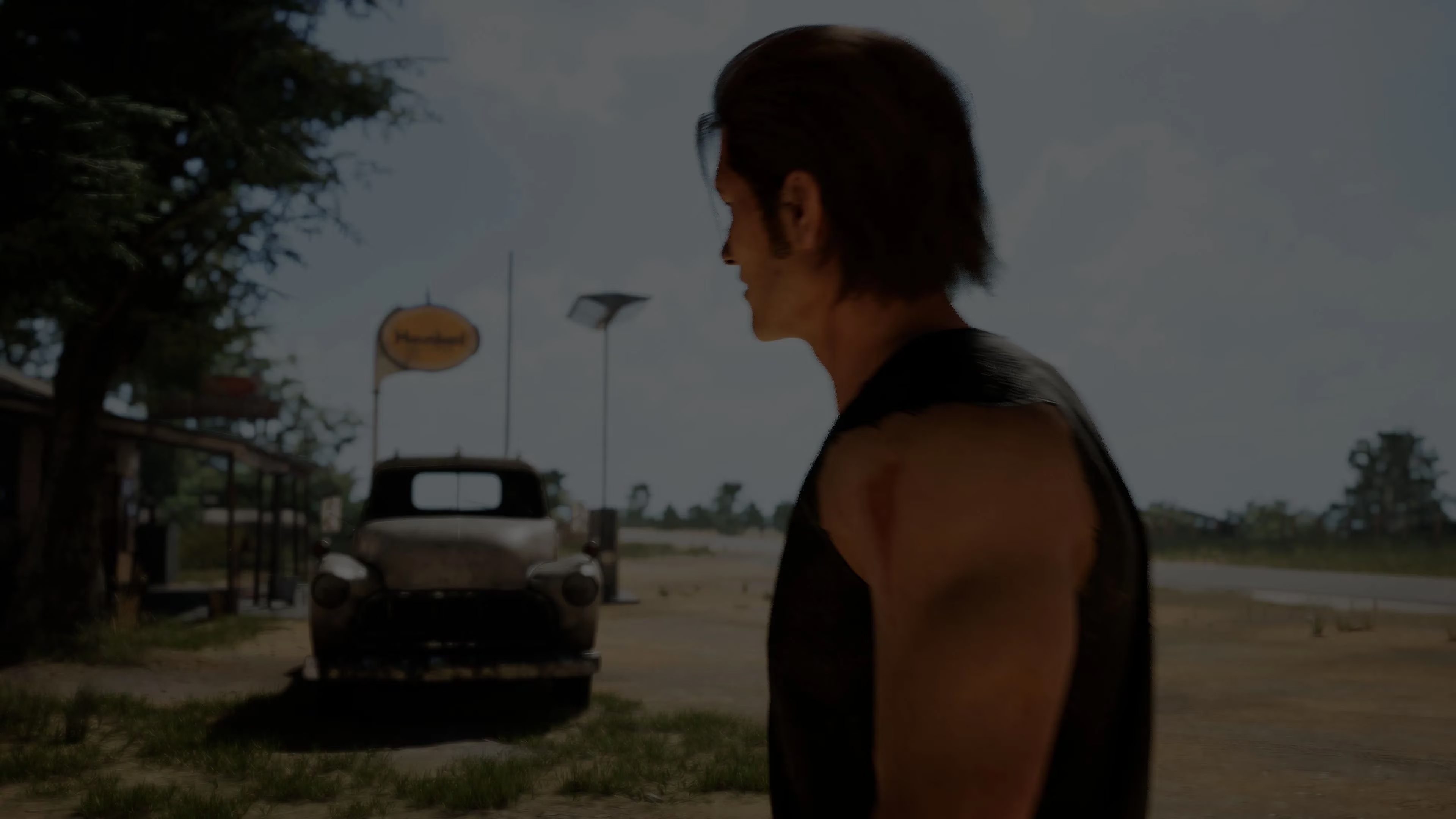
Now, I have one nitpick, and it hasn’t changed much since 2023: the maps. They’re brilliantly designed—mazelike, full of hidden paths, and each layout test your knowledge of the family’s patrol routes. But visually? They all bleed together. Texas is flat and dusty, and after a dozen hours, you might find yourself squinting at the screen trying to remember if you’re at the Family House or the Gas Station. The developers stuck hard to the 1974 movie’s aesthetic, which is great for authenticity, but I’d be lying if I said I didn’t wish for a little more variety. Who knows, maybe 2027 will bring us that abandoned carnival we’ve been begging for.
Despite that, The Texas Chain Saw Massacre remains the asymmetric horror game fully realized. It took the raw, gritty horror of the original film and mashed it with the frantic energy of the genre, and it’s only gotten better with age. New characters, maps (even if samey), and balancing tweaks have kept me coming back. If you’ve ever wanted to feel what it’s like to barely escape a family of cannibals, this is it. The game doesn’t just ask you to survive—it asks you to be quiet, be clever, and sometimes, just run.